Introduction
Forensic science Discover the fascinating field of Forensic Science, the application of scientific principles to legal matters. This post delves into its many disciplines, from DNA analysis to crime scene investigation, its importance in the justice system, Read Full Definition has various specialized fields that contribute to the investigation and analysis of crimes. One such field is forensic ballistics
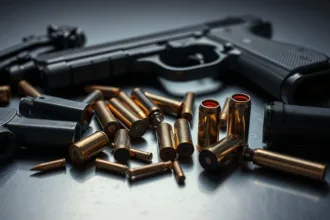
 Forensic ballistics is a field within forensic science that examines firearms, bullets, and the trajectory of projectiles to help solve crimes. Read Full Definition, which focuses on the examination of bullets and firearms to gather crucial information for criminal investigations. By analyzing the behavior, flight, and impact of projectiles, forensic ballistics experts can reconstruct crime scenes and provide valuable evidence
 Evidence is any form of proof, such as objects, materials, or scientific findings, presented to establish or disprove a fact in a legal proceeding. It is used to reconstruct events and link or exclude individuals Read Full Definition in legal proceedings. This article delves into the world of forensic ballistics, exploring its applications, techniques, and the wealth of information that can be extracted from bullets.
Understanding Forensic Ballistics
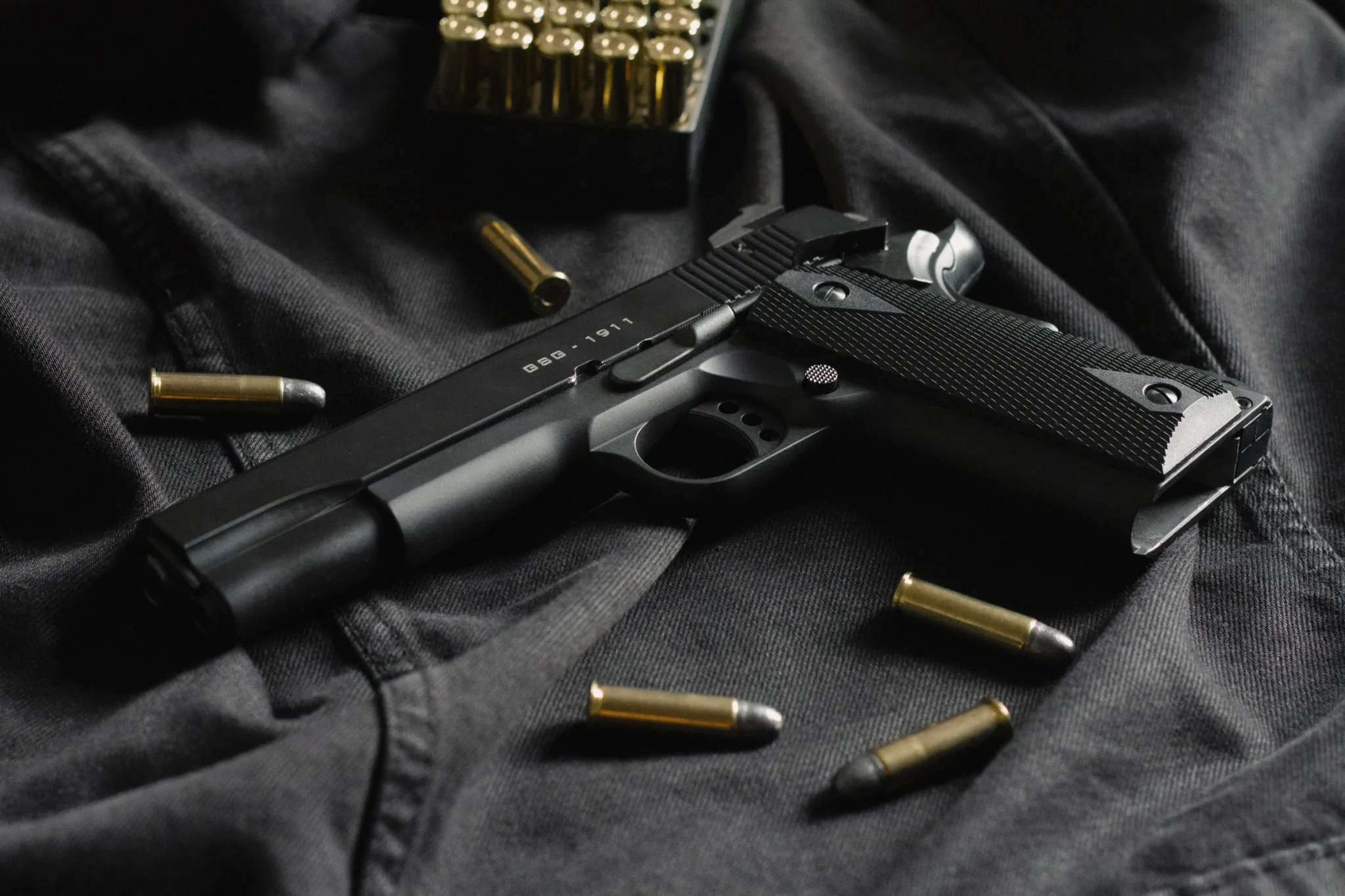
Forensic ballistics, also known as ballistic fingerprinting, is a branch of forensic science that applies mechanics principles to studying bullets and firearms. It involves analyzing tool marks, firearms, and ammunition to establish connections between bullets and the firearms from which they were fired. Forensic firearms and toolmarkA mark created when a tool or object contacts, presses, cuts or slides against another material. examinations may assist investigations by documenting ammunition-related features and evaluating whether questioned bullets or cartridge cases could share a firearm source. The weight and legal admissibility of any opinion depend on the method, supporting data Information in analog or digital form that can be transmitted or processed. Read Full Definition, reported limitations and applicable legal requirements.
The Power of Ballistic Fingerprinting
Firearm and toolmark comparison examines class characteristicsFeatures shared by objects in a particular class because of design, manufacture, composition or other common properties. and potentially distinguishing microscopic marks on bullets and cartridge cases. Some marks arise from manufacturing processes or later wear, but the assumption that every firearm inevitably produces a uniquely identifiable mark in every firing is not established. Examiners assess the suitability and quality of the marks, consider similarities and differences under documented procedures, and report the scope and limitations of any source opinion. Class characteristics can help narrow firearm types, but a damaged impact surface alone is not a substitute for an appropriate firearm examination.
These distinctive patterns, such as rifling marks and striations, are created by the grooves inside the barrel of a firearm. The grooves provide the bullet with spin, improving its flight accuracyIn scientific and measurement contexts, "accuracy" refers to the degree of proximity or closeness between a measured value and the true or actual value of the measured quantity. Accuracy indicates how well a measurement reflects Read Full Definition. Many firearms share the same class rifling characteristics, including the number and direction of lands and grooves. These observations may narrow the types of barrels that could have fired a bullet, but cannot independently identify one firearm. Microscopic details require a qualified comparison, and recovery of an obliterated serial number is a separate specialist examination.
Unveiling the Crime Scene: How Forensic Ballistics Works
Forensic ballistics plays a significant role in reconstructing crime scenes and uncovering vital details that can lead to the identification of perpetrators. Here are some remarkable ways forensic ballistics is used to link guns to crime scenes:
Patterns left by Gunpowder Residues: When a firearm is discharged, it not only ejects the bullet but also expels gunpowder residues. These residues create distinct patterns on nearby objects, depending on the distance between the weapon and the target. Forensic ballistics experts can analyze these patterns to determine the approximate firing distance. This information can help differentiate between cases of self-inflicted injuries and homicides, where the absence of powder marks on the victim’s hand or surrounding areas would suggest foul play.
Analyzing Trajectory, Bullet Cavities, and Ricochet: Tracing the flight path of a bullet is crucial in recreating the sequence of events during a crime. By examining bullet holes and impact marks on surfaces, investigators can determine the trajectory of the projectile and deduce the shooter’s position. Traditional methods involved using sticks and strings inserted into bullet holes to establish the flight path. However, modern techniques utilize lasers for more precise"Precise" refers to the degree of closeness or consistency between multiple measurements or values taken under the same conditions. It indicates how well these measurements agree with each other, regardless of whether they are accurate Read Full Definition trajectory analysis. Forensic experts can also gather valuable information from bullets that have ricocheted, providing additional clues about the crime.
Striations on a Fired Bullet: Barrel rifling can impart class characteristics, such as the number and direction of lands and grooves, and microscopic striated marks. The quality and reproducibility of these marks vary with the firearm, ammunition and condition of the bullet. A qualified examiner can compare questioned material with suitable reference bullets and may provide a source opinion within a documented conclusion framework. Database searches may generate investigative leads, but a database candidate is not itself a confirmed firearm identification.
Firearm Examination and Restoration: Forensic ballistics experts also examine firearms recovered from crime scenes. They inspect the weapon for any signs of tampering, modifications, or malfunctions that may have affected its performance. Additionally, they can restore obliterated or tampered serial numbers through various techniques such as chemical etching or magnetic particle inspection. Recovering the serial number can help trace the firearm’s history, ownership, and potential involvement in previous crimes.
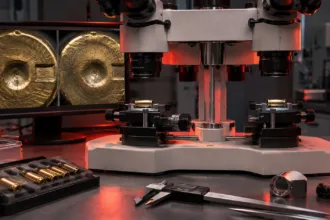
Comparison Microscopy: Comparison microscopy permits side-by-side evaluation of questioned and known bullets or cartridge cases for class agreement, potentially corresponding microscopic detail and relevant differences. Interpretation should consider the quality of both samples, the possibility of subclass characteristics, reproducibility, the permitted conclusion scale and the method’s limitations. An examiner may report an identification, elimination or inconclusive result according to the laboratory’s validated procedures; a visual similarity is not automatically an error-free determination of source.
Challenges and Limitations
While forensic ballistics is a valuable tool in criminal investigations, it does have certain limitations and challenges:
Variability and Limitations: The quantity and quality of firearm toolmarks depend on manufacturing characteristics, wear, ammunition, deformation and impact history. Some markings are shared at the class or subclass level; others may be too limited for meaningful comparison. Examiner decisions have nonzero error potential, and their evidential strength cannot be reduced to a universal statement of absolute uniqueness or certainty. The expert should report conclusions and limitations without declaring that a firearm source has been proved beyond reasonable doubt; that is a legal standard for the fact-finder. For empirical context, see the NIJ-sponsored 2025 firearm toolmark research and research on interpreting firearms comparison error-rate studies.
Lack of a Comprehensive Database: The effectiveness of ballistic fingerprinting relies heavily on the availability of a comprehensive and up-to-date database of firearms and their corresponding ballistics characteristics. However, maintaining such a database is complex, and many countries do not have centralized databases covering all firearms in circulation. Limited access to reliable reference samples can make establishing conclusive matches between bullets and firearms difficult.
Subjectivity and Interpretation: Ballistic analysis, particularly when examining tool marks and striations, involves a degree of subjectivity and expert interpretation. Different examiners may have varying levels of expertise and may reach different conclusions based on their observations. This subjectivity can introduce a margin of error and increase the likelihood of disputes in the interpretation of forensic ballistics evidence.
Lack of Standardized Protocols: While there are guidelines and best practices in forensic ballistics, there is a lack of standardized protocols across different laboratories and jurisdictions. This can result in inconsistencies in the methods used to examine, analyze, and interpret ballistic evidence. Harmonizing protocols and implementing quality controlQuality control (QC) refers to a series of activities and measures conducted on individual laboratory tests or analyses to verify and ensure the accuracy and reliability of the results. QC is a reactive approach that Read Full Definition measures can help enhance the reliability and credibility of forensic ballistics in legal proceedings.
Conclusion
Forensic ballistics plays a vital role in deciphering crimes through the examination of bullets and firearms. By analyzing tool marks, bullet striations, and other ballistic evidence, forensic experts can provide valuable information that links a bullet to a specific firearm and aids in crime scene reconstruction. Despite its challenges and limitations, forensic ballistics continues to be a valuable tool for investigators, helping to establish connections, identify perpetrators, and contribute to the pursuit of justice.