





Unraveling Methylamphetamine Toxicity: Insights from a Decade-Long Study in Victoria, Australia
A recent retrospective observational study conducted in Victoria, Australia, investigates the role of methylamphetamine (MA) toxicity in deaths reported to the Victorian Coroner between 2010…

Exploring the Mysterious Phenomenon of Sudden Infant Death Syndrome
Discover the latest research findings on sudden infant death syndrome (SIDS) and understand the factors that contribute to this mysterious phenomenon. Explore the link between…
Adipocere Formation: The Science of Grave Wax in Forensic Investigations
Delve into the fascinating world of adipocere, or 'grave wax.' This comprehensive guide explores the unique chemical process of its formation, the diverse environmental and…

The Indispensable Role of Mummification in Forensic Investigations
Mummification, a natural form of body preservation, offers invaluable insights in forensic investigations by retaining features crucial for identification, estimating post-mortem interval, and revealing the…

Understanding Marbling and its Importance
Learn about the importance of marbling in forensic science and how it can assist in determining the time and cause of death. This article discusses…
Decomposition and its Medicolegal Importance in Forensic Science
Discover the different stages and attributes of decomposition and how they can aid in identifying crucial medicolegal aspects such as the time of death, cause…

How cadaveric spasm is different from rigor mortis?
Rigor mortis and cadaveric spasms are muscle changes after death, but they have some critical differences. Rigor mortis is a gradual process affecting all body…

Cadaveric Spasm: The Silent Witness of the Final Moments
Unlocking the final moments: Cadaveric spasm, an immediate stiffening at death, provides critical forensic evidence, revealing circumstances surrounding violent or traumatic fatalities.
Mechanism of Rigor Mortis and Its Medicolegal Importance
Rigor mortis, a key post-mortem change, provides critical forensic clues. Explore its biochemical mechanism, the factors influencing its onset and duration, and its indispensable role…
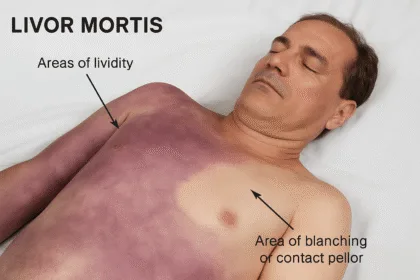
Postmortem Lividity (Livor Mortis): Forensic Role in Time of Death
Postmortem staining occurs after death due to blood settling in dependent parts of the body. It is important in determining cause and time of death.…

Algor Mortis (Postmortem Cooling) and its Significance in Forensic Investigations
Algor mortis, also known as postmortem cooling, is a gradual reduction in body temperature that occurs after death. This cooling process can help estimate the…
Understanding the Stages of Decomposition in the Human Body
Unraveling the mysteries of death: This comprehensive guide details the progressive stages of human decomposition, crucial insights for forensic investigators in estimating time since death…