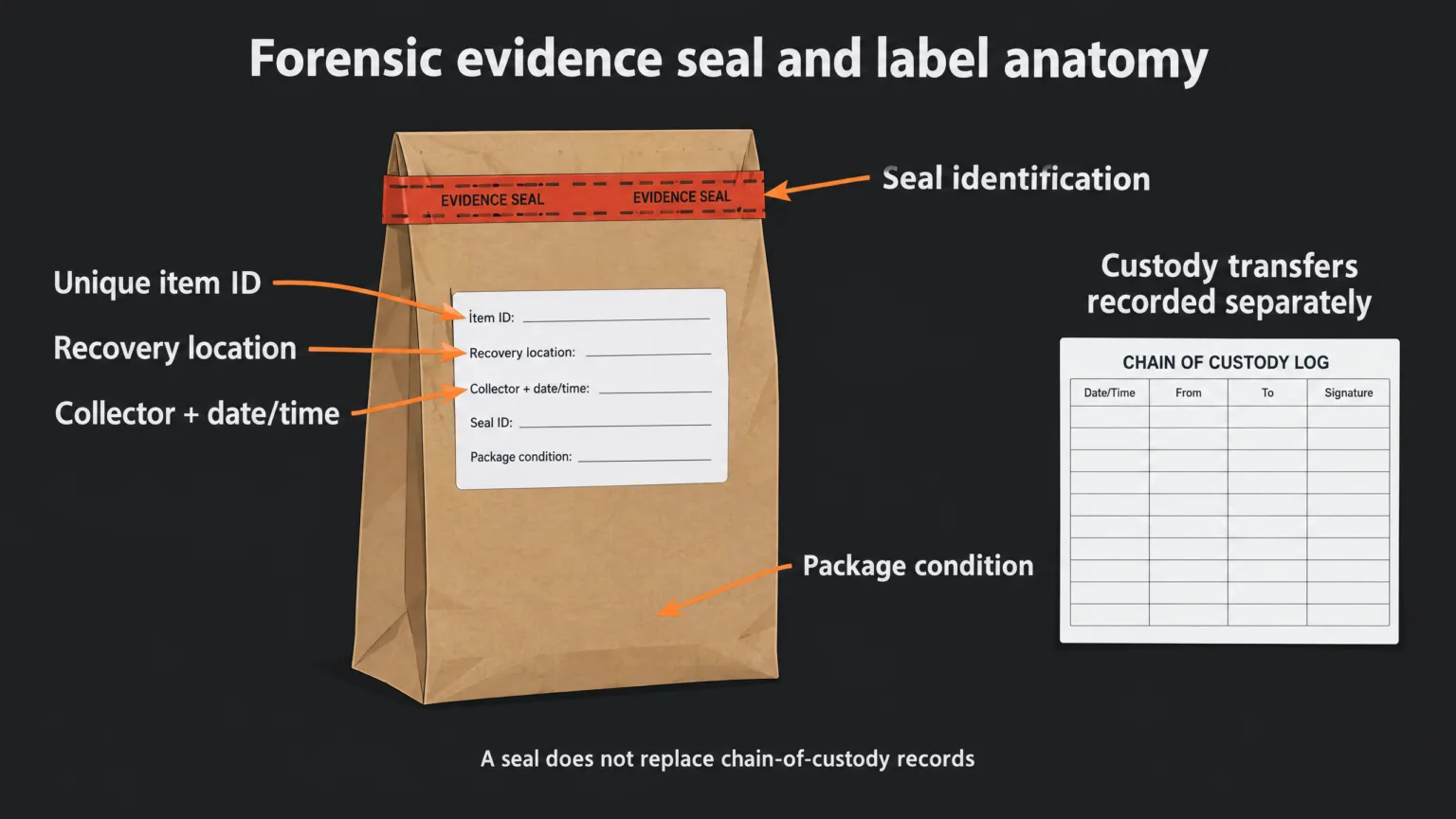
Chain of custody is a documented history of evidence handling and transfer. Accurate records, appropriate packaging, secure storage, and clearly identified changes of possession help investigators and courts assess whether an exhibit can be traced reliably from collection to examination and presentation. Such documentation supports integrity but does not, by itself, prove that contamination or handling errors are impossible. For the wider scene context, see Crime Scene Investigation: A Comprehensive Guide.
- Understanding the Chain of Custody Concept
- Legal Implications of Chain of Custody
- Physical Evidence and Digital Evidence Handling
- Documentation: Custody Forms and Evidence Logs
- Step-by-Step Guide: Maintaining the Chain of Custody
- Real-World Case Studies: Lessons Learned
- Role of Emerging Technologies in Chain of Custody
- Implementing Standard Protocols in Law Enforcement
- Conclusion
- FAQs
Chain of custody is a central safeguard for documenting evidence identity, possession and transfers. It helps a court or reviewer evaluate integrity and authenticity but cannot, by itself, guarantee that evidence was uncontaminated or that a particular item will be legally admissible. Serving as a comprehensive and chronological record, the chain of custody meticulously documents every step from the initial discovery at the crime scene through analysis and finally to its presentation in court.
This process is important for evaluating evidence integrity. Serious handling or documentation failures can undermine the reliability or evidential weight of material and, depending on the circumstances and jurisdiction, may affect admissibility. A gap is a matter for investigation and disclosure, not automatic proof that the item is contaminated or fabricated.
Understanding the Chain of Custody Concept
Defining the Chain of Custody in Forensics
At its core, chain of custody is a documented trail of evidence identity, possession, relevant handling, transfers and disposition. Significant movements, opening or resealing, storage conditions and authorized examinations should be traceable as required by the evidence type and agency procedures. The aim is to support integrity and detect or explain changes, not to promise that tested material remains physically unchanged after necessary forensic examination.
Three core components define the chain of custody:
- Control: Ensuring evidence is physically held by authorized personnel only.
- Continuity: Maintaining an unbroken record of evidence handling.
- Documentation: Creating thorough records verifying every transfer and analysis step.
In practice, this means if an officer collects a sample at a crime scene, the chain of custody begins immediately and continues unbroken until the evidence is presented in court. Each person who handles or analyzes that sample must log their actions clearly, preserving its authenticity.
Legal Implications of Chain of Custody
Proper handling and documentation are not just procedural requirements; they are the foundation of forensic credibility.
Chain of custody isn’t merely procedural; it carries profound legal implications. Courts assess authenticationVerifying the identity of a user, process, or device, often as a prerequisite to allowing access to resources in an information system. Read Full Definition and admissibility according to the law of the relevant jurisdiction. Custody gaps and handling errors may affect evidential weight, prompt further investigation or, in some circumstances, lead to exclusion; no single rule makes every minor documentation error automatically fatal.
Moreover, the chain of custody isn’t limited to criminal courts. Civil cases, environmental lawsuits, and corporate fraud investigations similarly rely on meticulous documentation to uphold evidence authenticity.
For example, a chemical spill investigation demands a precise chain of custody to track samples taken from various locations, ensuring their validity in environmental litigation. Any deviation can drastically alter outcomes, underscoring the significance of thorough documentation.
Physical Evidence and Digital Evidence Handling
Forensic investigations rely on precise handling of materials from the crime scene to the courtroom. Each step, from collection to presentation, must follow strict protocols to ensure credibility. This process varies significantly between physical evidence and digital materials, requiring specialized methods and storage solutions.
Whether managing biological samples requiring specific environmental conditions or digital evidence needing cryptographic verification, the fundamental principles remain consistent: comprehensive documentation, secure handling, restricted access, and verification of evidence integrity at every stage of the investigative process.

Physical Evidence Handling
Detailed Collection Methods
Proper collection of physical evidence sets the foundation for an effective chain of custody. Collection begins by securing and documenting the crime scene through photography, sketches, and detailed notes, capturing the original context and condition of the evidence.
Investigators wear protective gear, such as gloves and masks, to prevent contamination. For instance, biological samples must be collected using sterile instruments and immediately sealed in containers labeled with unique identifiers, time, date, collector’s initials, and precise descriptions.
In the case of chemical substances or powders, evidence is documented visually and carefully collected using specialized containers to avoid contamination or exposure. Each step must be methodically documented to support future forensic examination.
Storage Guidelines
After collection, evidence storage becomes critical. Biological materials require specific environmental conditions—typically refrigeration at temperatures between 2°C and 8°C, or freezing below -10°C—to preserve integrity and prevent degradation.
Storage conditions must reflect the evidence type and applicable retention policy. Paper documents, wet biological material, liquid samples, fire debris and digital storage devices have different preservation needs; one fixed temperature and humidity specification is not appropriate for all evidence. Facilities should use documented, proportionate access controls and traceable item movements. Depending on risk and resources, this may involve secured rooms or cabinets, staff identification, access logs, monitored entry, electronic tracking or other controls; biometric readers and continuous camera surveillance are not universally mandatory.
Proper storage practices include avoiding stacking or crowding evidence to prevent accidental contamination or damage. Each item must have clearly designated spaces within secure facilities, maintained under conditions specifically suited to its preservation.
Digital Evidence Handling

Bit-for-Bit Imaging Explained
Digital evidence introduces unique complexities, primarily because electronic data can be easily altered without obvious physical indicators. Forensic investigators address this by using bit-for-bit imaging—an exact duplication method preserving every fragment of digital data, including deleted or hidden files.
During imaging, forensic professionals employ write-blockers, devices ensuring original evidence isn’t altered during data duplication. Where appropriate, cryptographic hashes can be calculated and compared to detect whether file contents or a forensic image have changed relative to a recorded value. Matching hashes support a claim of unchanged digital content across the comparison, but they do not prove that the original source or its metadata was authentic, that acquisition was lawful or complete, or that tampering was impossible. See NISTIR 8387 on digital evidence preservation and the NIJ chain-of-custody checklist.
Secure Storage and Encryption
Once captured, digital evidence must be stored securely. Storage media should be physically safeguarded within access-controlled rooms. DataInformation in analog or digital form that can be transmitted or processed. Read Full Definition encryption using industry-standard cryptography (AES-256) protects digital evidence against unauthorized access.
Blockchain-based custody logging has been proposed and explored in some systems, but it is not a generally required or universally deployed forensic practice. Such a ledger may make certain recorded entries harder to change without detection, yet it cannot verify that the original entry is accurate, that every physical transfer was recorded or that evidence handling complied with the relevant procedure. Conventional controlled logs, access records and audits remain essential.
Importance of Audit Trails for Digital Data Integrity
Due to digital data’s susceptibility to silent modification, audit trails become indispensable. Forensic software like EnCase or FTK Imager automatically generates comprehensive logs documenting who accessed the evidence, what analyses were performed, and when. These audit trails and cryptographic hash verification create robust safeguards against claims of evidence manipulation.
| Factor | Physical EvidenceEvidence is any form of proof, such as objects, materials, or scientific findings, presented to establish or disprove a fact in a legal proceeding. It Read Full Definition | Digital Evidence |
|---|---|---|
| Collection | Sterile collection, PPE use, Labeling, sealing, photography | Bit-for-bit imaging, write-blocking, encryption |
| Storage | Climate-controlled, Tamper-proof containers | Encrypted servers, encrypted drives |
| Transfer | Secure physical packaging | Encrypted digital tunnels |
| Authentication | Witness signatures | Cryptographic hashes |
| Risks | Biological degradation | Data obsolescence |
Both physical and digital materials may be important to criminal investigations. Appropriate documented handling supports confidence in provenance and integrity; evidential weight and admissibility are decided under the applicable legal rules.
Documentation: Custody Forms and Evidence Logs
Detailed custody forms and evidence logs form the critical foundation for maintaining an effective chain of custody. These records support traceability and an assessment of evidence integrity from collection through courtroom presentation; they cannot independently establish authenticity or exclude every opportunity for error.
Essential Components of Custody Forms
Custody forms should include detailed information ensuring complete traceability:
- Case and Item-Specific Identifiers:
Each custody form begins with unique case and item identifiers, typically involving a combination of alphanumeric codes assigned to evidence. These identifiers facilitate quick, error-free referencing throughout the investigation. - Collector and Handler Identification with Signatures:
Every individual interacting with evidence must provide clear identification, including their full name, official title, agency affiliation, and a signature verifying their involvement. Signatures create accountability, ensuring each handler’s responsibility is transparently documented. - Date, Time, and Conditions of Collection:
Precise"Precise" refers to the degree of closeness or consistency between multiple measurements or values taken under the same conditions. It indicates how well these measurements Read Full Definition timestamps and detailed descriptions of collection circumstances must be recorded, including environmental conditions, handling procedures, and the specific location where evidence was found. These conditions affect evidence reliability, especially for sensitive biological or chemical samples. - Precise Descriptions of Evidence Items:
Evidence descriptions should be thorough, noting specifics such as dimensions, colors, model and serial numbers, unique markings, and condition at collection. Digital evidence should include metadata such as file types, creation/modification dates, and exact storage media specifications. - Detailed Records of Every Custody Transfer:
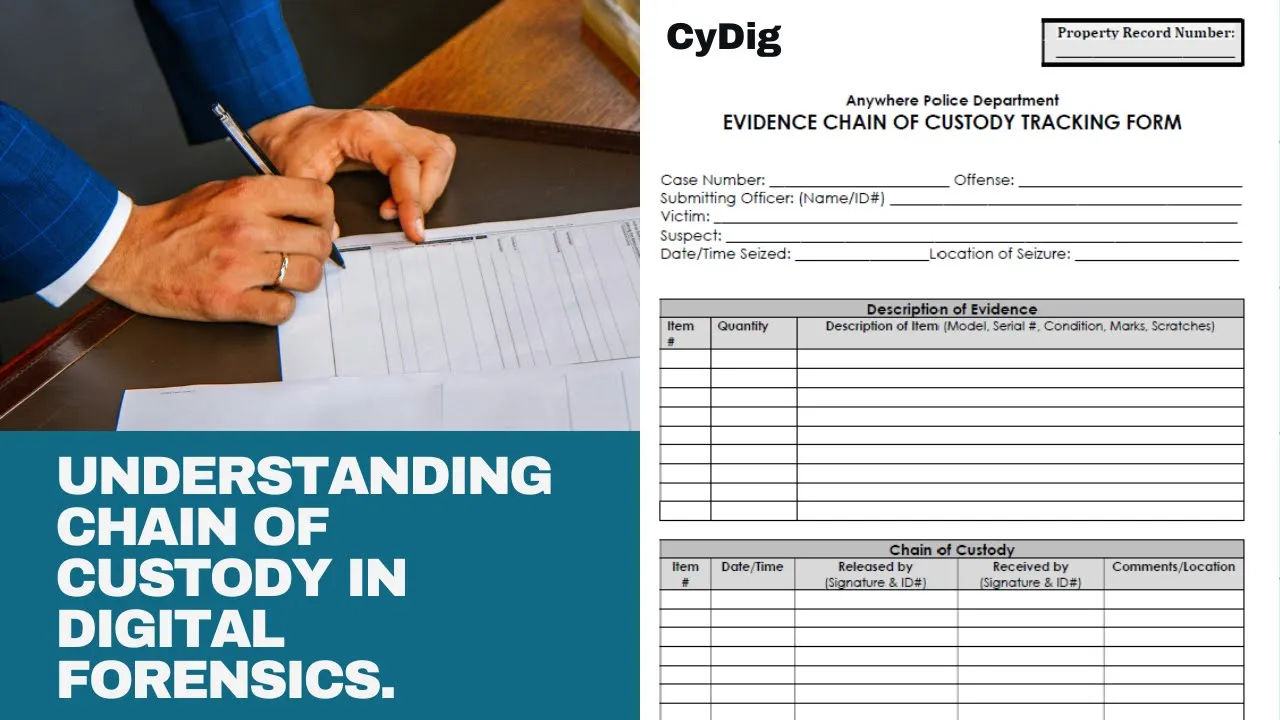
Each transfer entry must clearly indicate who transferred the evidence, who received it, their signatures, the exact date and time, and the explicit reason or purpose for the transfer. This creates an unbreakable chronological record, crucial for establishing evidence continuity and authenticity. - Final Evidence Disposition:
Custody documentation must also include records of the final disposition—whether evidence was destroyed, returned, or archived permanently, including authorization details and signatures of responsible officials.
Such meticulous record-keeping isn’t merely bureaucratic; it creates legally defensible trails essential for courtroom admissibility. It serves as transparent proof to judges, juries, and legal counsel that evidence handling adhered strictly to forensic protocols, preventing disputes over authenticity.
Here is a free sample form of the chain of custody.
Step-by-Step Guide: Maintaining the Chain of Custody
Maintaining the chain of custody requires consistent adherence to established procedures, from initial evidence recognition through courtroom presentation. Every step demands rigorous documentation, precise handling, and strict storage protocols.
Evidence Collection and Labeling
The integrity of evidence begins the moment it’s discovered:
- Secure and Document the Crime Scene:
Immediately restrict access to the crime scene, documenting the scene meticulously via detailed photographs, sketches, video recordings, and comprehensive written notes. This documentation creates the foundational context for all collected evidence. - Collect Evidence Methodically and Carefully:
Use sterile collection instruments for biological evidence (e.g., blood, saliva, or hair samples), ensuring that no contamination occurs. Digital evidence collection must involve write-blocking devices and bit-for-bit forensic imaging to avoid data alterations. - Label Evidence Immediately:
Evidence labels must be permanent and tamper-resistant and contain critical details: a unique evidence ID number, detailed descriptions, collection date/time, exact location, collector’s identity, and handling precautions required. Labels must remain attached securely to evidence packaging throughout the investigative lifecycle.
Secure Storage and Transfer
Post-collection handling is equally critical:
- Evidence Storage Protocols:
Evidence should be immediately secured in containers specifically designed to prevent contamination or deterioration. Biological evidence requires temperature-controlled (often refrigerated) storage, while documents must remain in climate-controlled facilities to avoid degradation. Digital media should be stored in electromagnetically shielded, humidity-controlled environments to prevent data corruption. - Detailed Transfer Documentation:
Every custody transfer—whether from scene to laboratory, between investigators, or to external experts—requires thorough documentation. Both the sender and receiver must log their identities, titles, signatures, precise transfer time/date, and detailed reasons for transfer. Transfers must always occur within secure, monitored environments. - Secure Transportation:
Transportation between locations necessitates adherence to strict security protocols, such as locked and monitored evidence containers, GPS-tracking of transport vehicles, and dual custody transport protocols where two authorized personnel oversee evidence transfers. Transportation logs, recording every movement, form part of the permanent custody documentation.
Real-World Case Studies: Lessons Learned
The following notable cases underscore the critical importance and impact of chain-of-custody procedures:
The Craigslist Killer (2009): Successful Digital Evidence Handling
Digital forensics proved pivotal in the case against Philip Markoff. Investigators carefully maintained a comprehensive digital evidence custody trail, including emails, IP addresses, and web communications. The meticulous documentation of evidence custody and handling led to Markoff’s conviction, highlighting proper chain-of-custody implementation in digital investigations.
O.J. Simpson (1994): Impact of Mishandled Physical Evidence
One of the most infamous examples of chain-of-custody failure was the O.J. Simpson murder trial. Mishandling and improper documentation of critical blood evidence created reasonable doubt regarding contamination and possible tampering. This significantly contributed to Simpson’s acquittal, emphasizing the severe repercussions of improper custody management.
David Camm (2000): Flawed Testimony and Incorrect Documentation
In David Camm’s wrongful conviction, inaccuracies and falsified credentials by forensic experts compromised evidence credibility. The faulty chain-of-custody documentation severely undermined the investigation. Eventually, after meticulous review and proper handling protocols, evidence demonstrated Camm’s innocence. This case illustrated the dire consequences of inadequate documentation standards and emphasized the necessity of stringent evidence management practices.
Role of Emerging Technologies in Chain of Custody
Advanced technologies significantly enhance traditional custody protocols:
Blockchain and Immutable Records
A properly designed, access-controlled electronic log can make custody events more traceable and some alterations detectable. Blockchain is one proposed technical implementation, not a universal requirement. No ledger proves that an entered event was true, that all transfers were recorded, or that exhibits were physically protected.
RFID, Barcode and Automated Tracking Systems
RFID (Radio FrequencyFrequency is a fundamental concept in physics and wave theory. It refers to the number of times a specific point on a wave, such as Read Full Definition Identification) technology automates custody tracking by embedding evidence packages with microchips automatically logged into digital custody management systems upon storage, transfer, or analysis. RFID reduces human error, enhances efficiency, and provides real-time audit trails for forensic evidence management. The Brazilian Techno-Scientific Police, for example, have implemented an automated management system where evidence receives RFID tags upon intake, and all movements between areas are automatically monitored and recorded.
Automated Forensic Software Solutions
Software tools such as EnCase, FTK Imager, or Cellebrite automate comprehensive custody logs, hash-value verification, and digital evidence audits, minimizing human error and establishing robust forensic records. These automated systems streamline evidence processing while maintaining secure and verifiable custody trails, significantly enhancing credibility and courtroom admissibility.
Implementing Standard Protocols in Law Enforcement
Law enforcement agencies and forensic experts bear substantial responsibility in upholding chain-of-custody integrity:
Continuous Training and Certification
Regular mandatory training ensures officers and forensic professionals remain proficient in current custody standards, evidence collection protocols, and emerging forensic technologies. Annual certifications further reinforce accountability and competence in evidence handling practices.
Advanced Security Measures
Evidence facilities may use controlled doors, named-authorized personnel, access logs, inventory audits and, where appropriate, surveillance or biometric entry. Selection is risk-based and subject to local security, privacy and accreditation requirements; any one technology cannot prevent all unauthorized handling.
Compliance and Auditing Protocols
Regular compliance audits conducted by independent parties or internal quality control teams verify adherence to custody protocols, immediately correcting deviations to maintain forensic credibility. Audits ensure protocols remain consistently robust and are adapted promptly to evolving legal standards and technological advancements.
Blockchain Integration
Some projects have explored blockchain-based custody logs, but broad routine adoption and a general reduction in tampering disputes should not be assumed without supporting evidence. Whatever system is used, trained personnel, controlled access, validated processes, signed or authenticated transfers, and audit review remain necessary.
Conclusion
Maintaining an unbroken and meticulously documented chain of custody is not merely procedural—it’s foundational to the integrity of the entire forensic investigation and legal justice system. Effective chain-of-custody practices ensure that evidence remains credible, admissible, and persuasive in court, directly impacting legal outcomes. Cases ranging from the O.J. Simpson trial to the Craigslist Killer underscore that accurate and complete documentation is crucial—any deviation can alter verdicts, affecting lives profoundly.
As forensic methodologies evolve, custody protocols must also evolve. Electronic inventory, barcode and RFID systems can improve traceability when correctly configured, supported by staff training and tested against physical exhibits. Blockchain remains an optional approach under development in some settings. Neither automation nor a cryptographic log replaces controlled procedures, documented custody transfers and appropriate auditing.
Ultimately, safeguarding evidence integrity through impeccable chain-of-custody procedures serves a broader purpose: it upholds public trust in forensic science and ensures fairness within our legal system. As we advance further into the digital age, continued vigilance and adaptation remain imperative, solidifying the chain of custody as the bedrock of forensic credibility and judicial fairness.
FAQs
What is the purpose of maintaining a chain of custody in forensic investigations?
The primary purpose is to ensure the integrity and authenticity of materials collected. It provides a documented trail that tracks handling from collection to courtroom presentation.
How does digital evidence differ from physical evidence in terms of custody?
Digital evidence requires suitable acquisition, integrity checks, controlled access, retention and documented transfers. EncryptionEncryption is the process in which the message or data is scrambled using the various algorithms available in all cryptographic algorithms. Read Full Definition can protect confidentiality and hashes can reveal changes relative to recorded values; neither verifies the truth of the original data.
How does technology enhance evidence security?
Digital tracking systems can document events and help detect some unauthorized changes, but they cannot guarantee that the original data or custody entries are complete and accurate.
How is evidence presented in court to maintain its integrity?
Presenting materials in court involves demonstrating a clear, unbroken custody trail and ensuring proper documentation supports its authenticity.