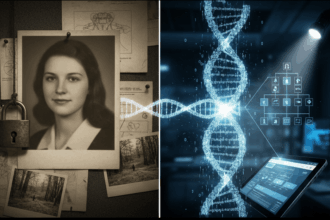
Forensic Science Timeline: Ancient Times to Modern History
The earliest application of forensic science dates back to the ancient Greek and Roman societies. Those civilizations made significant contributions to the field of medicine, especially pharmacology.
1991: National Research Council Committee on Forensic DNADNA, or Deoxyribonucleic Acid, is the genetic material found in cells, composed of a double helix structure. It serves as the genetic blueprint for all living organisms. Read Full Definition (NRC I) publishes DNA Technology in Forensic ScienceDiscover the fascinating field of Forensic Science, the application of scientific principles to legal matters. This post delves into its many disciplines, from DNA analysis to crime scene investigation, its importance in the justice system, Read Full Definition.
In response to concerns about the practice of forensic DNA analysis, the National Research Council Committee on Forensic DNA (NRC I) publishes DNA Technology in Forensic Science.
1992: STR for forensic DNA Analysis
Thomas Caskey and colleagues publish the first paper suggesting using short tandem repeats for forensic DNA analysis.
Collaborating with Roche Molecular Systems, Promega Corporation, and Perkin-Elmer Corporation, independently develop commercial kits for forensic DNA STR typing.
1992: Introduction of Drugfire System
The FBI contracted with Mnemonic Systems to develop Drugfire, an automated imaging system to compare marks left on cartridge cases and shell casings, similar to IBIS. The ability to compare fired bullets was subsequently added.
1992: National Institute of Forensic Science commences operations.
National Institute of Forensic Science commences operations. Amongst its roles are the development of national standards of quality controlQuality control (QC) refers to a series of activities and measures conducted on individual laboratory tests or analyses to verify and ensure the accuracy and reliability of the results. QC is a reactive approach that Read Full Definition and accreditationAccreditation – a process by which a laboratory must prove to an accrediting agency that their processes, equipment, and employees are competent, credible, and accurate. The accrediting agency will inspect the laboratory and observe its Read Full Definition of forensic laboratories throughout Australia.
1993: The Daubert Standard
In Daubert et al. v. Merrell Dow, a U.S. federal court relaxed the Frye standard for admission of scientific evidenceEvidence is any form of proof, such as objects, materials, or scientific findings, presented to establish or disprove a fact in a legal proceeding. It is used to reconstruct events and link or exclude individuals Read Full Definition and conferred on the judge a “gatekeeping” role. The ruling cited Karl Popper’s views that scientific theories are falsifiable as a criterion for whether something is “scientific knowledge” and should be admissible.
Daubert v. Merrell Dow Pharmaceuticals establishes new rules for admitting scientific evidence into the courtroom and alters the Frye Rules set in 1923.
1994: Additional Markers to forensic DNA typing Sytem
Roche Molecular Systems (formerly Cetus) released a set of five additional DNA markers (“polymarker”) to add to the HLA-DQA1 forensic DNA typing system.
1995: The world’s first national DNA database commences
The world’s first national DNA database commences operations in the UK on 10 April 1995.
1996: The Second National Research Council Committee on Forensic DNA (NRC II)
In response to continued concerns about the statistical interpretation of forensic DNA evidence, a second National Research Council Committee on Forensic DNA (NRC II) was convened and published The Evaluation of Forensic DNA Evidence.
1996: DNA Profiling used to Solve Cold Case
Rodney WINTERS is convicted of the rape and murder of a woman at South Australia’s Edinburgh Air Force base 14 years earlier. After DNA profilingDNA profiling, also known as DNA fingerprinting, is a significant technique in forensic science that identifies individual's unique DNA patterns for various purposes such as establishing familial relationships or tracing genealogical roots. The technique, which Read Full Definition matches him to semen found on the dead woman, WINTERS confesses.
1996: DNA evidence certified
National Academy of Sciences announces DNA evidence is reliable.
1996: Automatic Fingerprint Identification System (AFIS) introduced
The FBI introduced computerized searches of the AFIS fingerprint database. Livescan and card scan devices allowed interdepartmental submissions.
1996: Mitochondrial DNA evidence in Courtroom:
In the US, mitochondrial DNA evidence is used in a court for the first time. Paul WARE is convicted of the rape and murder of a four-year-old girl after mitochondrial DNA profiling matches him to a hair found on the child’s body.
1998: The National DNA Index System (NDIS) becomes operational
The FBI sets up the National DNA Index System in the USA, enabling interstate cooperation and federal law enforcement agencies to compare DNA profiles electronically to link crimes.
1999: Faster fingerprint IDs
FBI establishes the integrated automated fingerprint identification systemA.F.I.S. (Automated Fingerprint Identification System) is a sophisticated database and software solution that expedites fingerprint analysis and identification by comparing submitted fingerprints with a vast database of known fingerprints. Read Full Definition, cutting down fingerprint inquiry response from two weeks to two hours. The FBI upgraded its computerized fingerprint database and implemented the Integrated Automated Fingerprint Identification System (IAFIS), allowing paperless submission, storage, and search capabilities directly to the national database maintained at the FBI.
1999: National Integrated Ballistics Network (NIBIN)
A Memorandum of Understanding is signed between the FBI and ATF, allowing the use of the National Integrated Ballistics Network (NIBIN), to facilitate exchange of firearms dataInformation in analog or digital form that can be transmitted or processed. Read Full Definition between Drugfire and IBIS
1999: One million DNA Profiles
In the UK, the Forensic Science Service announces that the number of DNA profiles of suspects and convicted criminals on the national DNA database has reached one million or roughly one third of the estimated criminally active population.
2001: Faster DNA Identification
Technology speeds up DNA profiling time, from 6-8 weeks to between 1-2 days.
2007: Footwear detection system
Britain’s Forensic Science Service develops online footwear coding and detection system. This helps police to identify footwear marks quickly.
2008: Detection after cleaning
A way for scientists to visualize fingerprintsFingerprint, impression made by the papillary ridges on the ends of the fingers and thumbs. Fingerprints afford an infallible means of personal identification, because the ridge arrangement on every finger of every human being is Read Full Definition even after the print has been removed is developed, relating to how fingerprints can corrode metal surfaces.
2011: Facial sketches matched to photos
Michigan state university develops software that automatically matches hand-drawn facial sketches to mug shots stored in databases.
2011: Four second dental match:
Japanese researchers develop a dental x-ray matching system. This system can automatically match dental x-rays in a database and makes a positive match in less than 4 seconds.
2015: Forensic DNA phenotyping
Forensic DNA Phenotyping refers to the prediction of appearance traits of unknown sample donors, or unknown deceased (missing) persons, directly from biological materials found at the scene. “Biological witness” outcomes of Forensic DNA Phenotyping can provide investigative leads to trace unknown persons, who are unidentifiable with current comparative DNA profiling.
2018: Forensic Genetic Genealogy (FGG)
The arrest of Joseph DeAngelo as the suspected Golden State Killer in 2018 brought the investigative use of genetic genealogy to the world’s attention. Genetic genealogy has since been used to generate investigative leads in nearly 200 cold cases and some active investigations.
Forensic Analyst by Profession. With Simplyforensic.com striving to provide a one-stop-all-in-one platform with accessible, reliable, and media-rich content related to forensic science. Education background in B.Sc.Biotechnology and Master of Science in forensic science.




 DNA, or Deoxyribonucleic Acid, is the genetic material found in cells, composed of a double helix structure. It serves as the genetic blueprint for all living organisms. Read Full Definition (NRC I) publishes DNA Technology in Forensic Science


 Information in analog or digital form that can be transmitted or processed. Read Full Definition between Drugfire and IBIS