


The “Silent” Violence In forensic casework, few things are as frustrating as the disconnect between a victim’s account of a life-threatening struggle and the lack of physical evidence
 DNA, or Deoxyribonucleic Acid, is the genetic material found in cells, composed of a double helix structure. It serves as the genetic blueprint for all living organisms. Read Full Definition kit comes back negative, but the survivor’s trauma is real. The same applies to strangulation. Victims often report being choked to the point of unconsciousness, yet standard clinical exams—and even daylight photography—reveal absolutely nothing. The skin of the neck can be deceptively resilient, hiding catastrophic internal damage beneath an unblemished surface.
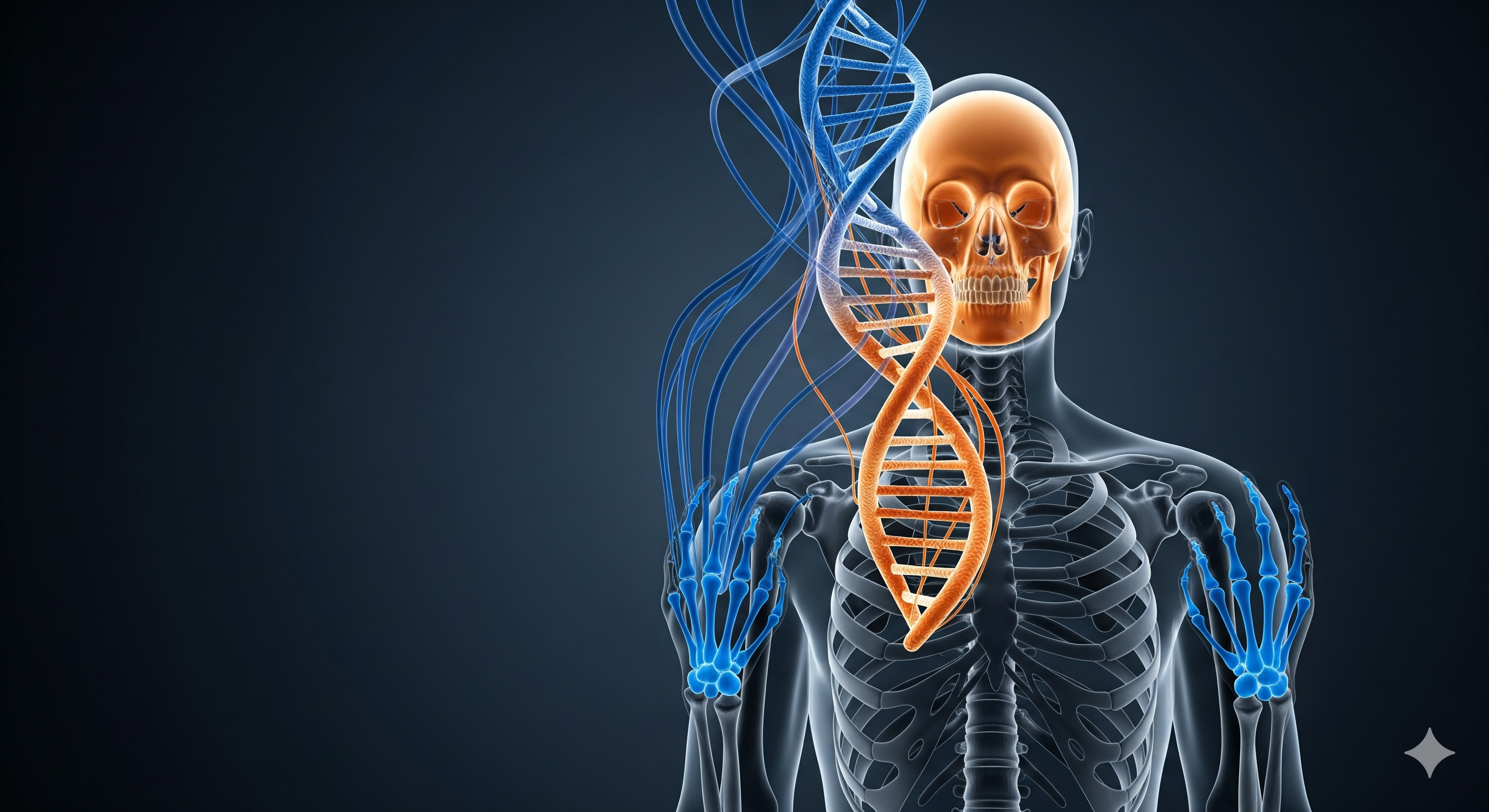
The Research This brings us to a pivotal study recently published in the International Journal of Legal Medicine by Bauer et al., titled “Longitudinal visibility of MRI findings in living victims of strangulation.“ The researchers challenged the conventional wisdom that the “forensic window” for imaging injuries closes within 48 hours. By tracking 20 strangulation victims with repeated MRI scans, they discovered that internal evidence of violence—specifically hemorrhages and edema—remains visible, and sometimes even evolves, up to 12 days post-assault.
The Research Breakdown
Methodology: Novelty and Robustness
The strength of this study lies in its longitudinal design. Most previous research captured a snapshot of injuries within two days of the assault. Bauer et al. took a more rigorous approach. They recruited 20 victims and attempted to scan them twice:
- Timeframe 1: Within the first 5 days (Mean: 3 days).
- Timeframe 2: Between 5 and 12 days (Mean: 8.4 days).
They utilized a 3 Tesla MRI system with a dedicated 20-channel head and neck coil—this isn’t your standard hospital “quick scan.” They employed seven specific sequences, including T2-weighted SPACE and T1-weighted TSE, designed to hunt for fluid (edema) and blood in soft tissues. Crucially, the radiological reading was blinded. Two radiologists reviewed the scans without knowing the victim’s history or which scan came first, removing confirmation biasThe difference between the expectation of the test results and an accepted reference value. Read Full Definition.
Key Findings: Data and Caveats
The results provided a dataset that challenges current Standard Operating Procedures (SOPs) for medical-legal exams:
- Longevity of Evidence: Findings did not disappear after the 48-hour mark. In fact, specific types of injuries, such as edema in the thyroid and lymph nodes, were often more visible in the second scan (days 5–12) than in the first.
- The “Iceberg” Effect: There was no correlation between external injuries (bruises, scratches) and internal MRI findings. A victim with a pristine neck externally could have significant internal hemorrhaging.
- Sequence SpecificityIn the context of laboratory equipment or analytical techniques, the term "specific" describes the capability of a machine or method to accurately and selectively detect particular molecules or substances while minimizing interference from others. Specificity Read Full Definition: Not all MRI settings are equal. The study identified that T2-weighted SPACE with fat suppression and T1-weighted TSE were the high-yield sequences. Standard brain MRIs are largely useless for neck soft tissue assessment.
- The Caveat of Interpretation: The study revealed low inter-rater agreement (Cohen’s kappa = 0.01) between the two radiologists. This highlights that detecting subtle forensic injuries requires specialized forensic training, distinct from standard clinical radiology.
An Analyst’s Analysis
Practical Implications
This research demands a shift in how we process living victims. Currently, if a victim reports a strangulation that occurred four or five days ago, many jurisdictions might assume it’s “too late” for an exam to yield results. This data Information in analog or digital form that can be transmitted or processed. Read Full Definition proves that assumption wrong.
We need to advocate A person who aligns themselves with the patient, providing emotional support, referral services for follow-up, contact with social services, legal assistance, arrangements for transportation, presence in court, and for other needs. Read Full Definition for delayed imaging protocols. If a victim presents late, or if a scanner isn’t immediately available, scheduling an MRI for day 8 or day 10 is not a waste of resources—it might actually reveal edema that hadn’t fully developed on day 1. Furthermore, this supports the use of infrared photography as a standard; the study noted one case where infrared revealed a hematoma that digital photography missed completely, which was then confirmed by MRI.
Contextualization
In the Hierarchy of Propositions, this evidence is critical for addressing Activity Level propositions.
- Source Level: “Is this the suspect’s DNA?” (My usual job).
- Activity Level: “Did the suspect strangle the victim?”
Often, I provide a DNA match, but the defense argues the contact was consensual or social. DNA transfers easily and persists variably; it doesn’t inherently prove violence. However, an MRI showing deep tissue hemorrhage is much harder to explain away as “innocent social contact” than a touch DNA profile. Corroborating the action of strangulation with MRI data strengthens the DNA evidence placing the suspect at the scene.
My Perspective:
As someone who spends their life analyzing Short Tandem Repeats (STRs), I view this MRI data through the lens of signal-to-noise ratios and artifact management.
Think of an MRI signal like an electropherogram (EPG) in DNA analysis. When we look at a low-level DNA sample, we have to distinguish the true allele
- The “Edema” Analogy: The study notes that edema (swelling) sometimes appears later as a “residuum of hemorrhage resorption.” Imagine this like degradation in a DNA profile. Just as high molecular weight DNA breaks down into smaller fragments over time, the initial “signal” of the fresh blood degrades and transforms into a different “signal” (edema). A standard clinical radiologist might look for the “full profile” (fresh blood) and miss it, while a forensic specialist knows to look for the “degradation products” (the late-stage edema).
The low inter-rater agreement in this study terrifies me, but it doesn’t surprise me. In STR analysis, we use validated thresholds (e.g., a 150 RFU analytical threshold) to ensure two analysts call the same peak. Radiology lacks these strict, binary forensic thresholds for soft tissue injury. Until forensic radiology establishes its own “stochastic thresholds”—defining exactly how much signal intensity change constitutes a confirmed hemorrhage—we will see this subjectivity persist.
Furthermore, we must talk about validationValidation, often referred to as method validation, is a crucial process in the laboratory when introducing a new machine, technology, or analytical technique. It involves a series of systematic steps and assessments to ensure that Read Full Definition. The study used a “specialized protocol.” In my lab, if I used a non-validated PCR cycle number, the court would throw out the evidence. Similarly, hospitals cannot just throw a strangulation victim into a routine neck coil. Legal, forensic-specific MRI protocols must be validated and standardized across institutions to withstand cross-examination.
Conclusion
Bauer et al. have provided a compelling argument for extending the investigative timeline. By proving that the neck keeps the score for up to 12 days—often keeping it hidden from the naked eye—they have given forensic science

Original Research Paper
Bauer, M., Hollenstein, C., Lieb, J.M. et al. Longitudinal visibility of MRI findings in living victims of strangulation. Int J Legal Med 138, 1425–1436 (2024). DOI: https://doi.org/10.1007/s00414-024-03207-1 License: Open Access under Creative Commons Attribution 4.0 International License.

Term Definitions:
- Edema: An accumulation of fluid in the body’s tissues, often a reaction to injury or inflammation.
- Longitudinal Study: A research design that involves repeated observations of the same variables (in this case, injuries) over a period of time.
- T2-weighted SPACE: A specific 3D MRI sequence optimized to visualize fluids (like edema) and suppress fat signals, making injuries stand out.
- Hemorrhage: Escape of blood from a ruptured blood vessel; internal bleeding.
- Forensic Window: The timeframe during which evidence (biological or injury-based) can be reliably collected or imaged.
- Cohen’s Kappa: A statistical measure used to assess the agreement between two raters (radiologists), accounting for chance.
- SGRM: Swiss Society of Legal Medicine, which sets guidelines for forensic examinations used in the study.
- Petechial Hemorrhages: Tiny, pinpoint red spots caused by broken capillaries, often associated with strangulation or hypoxia.
- Stochastic Threshold: A concept from DNA analysis referring to the data point below which data is unreliable; applied here as an analogy for radiological interpretation limits.