Forensic DNADNA, or Deoxyribonucleic Acid, is the genetic material found in cells, composed of a double helix structure. It serves as the genetic blueprint for all Read Full Definition analysis uses biological material and genetic markers to investigate questions about possible contributors, biological relationships and human identity. When performed and interpreted correctly, it can provide powerful evidence. It cannot, by itself, explain every circumstance in which DNA was deposited. This guide follows the entire process—from the crime scene to the laboratory report—then links to specialized articles on each method.
- 1. What is forensic DNA analysis?
- 2. Which DNA markers do forensic scientists analyze?
- 3. From crime scene to DNA profile: the standard workflow
- 4. Why do some samples produce weak or partial DNA profiles?
- 5. Interpreting DNA mixtures
- 6. What do DNA matches, probabilities and likelihood ratios mean?
- 7. The critical distinction: DNA source versus DNA activity
- 8. Y-STRs, mitochondrial DNA, SNPs and emerging technologies
- 9. Quality assurance, validation, contamination control and human factors
- 10. Where is forensic DNA analysis used?
- 11. Structured learning library: explore each part in depth
- 12. Frequently asked questions
- 13. Scientific standards and primary references
Guide updated October 2026. Intended for forensic science students, educators and informed readers; laboratory casework requires validated methods, appropriate competency and jurisdiction-specific requirements.
1. What is forensic DNA analysis?
DNA, or deoxyribonucleic acid, is the hereditary material found in human cells. Forensic laboratories usually examine selected genetic markers rather than sequencing a person’s entire genome. A DNA profile summarizes the results at those markers and may be compared with reference profiles or evaluated under competing hypotheses.
EvidenceEvidence is any form of proof, such as objects, materials, or scientific findings, presented to establish or disprove a fact in a legal proceeding. It Read Full Definition can be recovered from blood, saliva, semen, epithelial cells, hair roots, bones, teeth and many other biological materials. Modern methods may recover human DNA from objects that have been handled or from samples containing very little biological material. The possibility of recovering a profile depends on sampling, preservation, quantity, quality, inhibition, analytical methods and interpretation criteria.
Three questions must be distinguished:
- What biological material or DNA was detected? This concerns observations and the analytical findings.
- Who might have contributed it? This concerns the comparison and statistical evaluation of DNA profiles.
- How and when did it arrive? This concerns transfer, persistence, background prevalence, recovery and the circumstances of the alleged activity.
A DNA profile may provide strong evidence relevant to a possible contributor. It does not automatically prove that contributor directly touched an object, participated in a crime or deposited the DNA at the time of the incident. The distinction is particularly important for low-level DNA on frequently handled objects.
2. Which DNA markers do forensic scientists analyze?
Autosomal short tandem repeats (STRs)
Autosomal STRs are short repeated DNA sequences found at specified locations on the non-sex chromosomes. The number of repeats varies among individuals. A person ordinarily inherits one allele from each parent at an autosomal locus, giving a useful combination across many loci. STR amplification followed by sizing or sequencing forms the foundation of routine human identification in many laboratories.
A widely used United States database framework, CODIS, has a set of 20 core autosomal STR loci, effective since 2017. These are database requirements in that system, not a universal statement that every forensic laboratory in every country must examine exactly 20 markers. Laboratories may use additional loci and other marker types.
Identical twins generally have indistinguishable standard autosomal STR profiles, and biological relatives share more alleles than unrelated individuals. Moreover, a profile containing alleles compatible with a person is not necessarily unique to that person, especially when profiles are partial or mixed. For the detailed technology, read A Comprehensive Exploration of STR Analysis.
Lineage and specialized markers
Y-chromosome STRs are often useful for recovering or describing a male lineage in the presence of substantial female DNA. They are transmitted predominantly along paternal lines, so close and distant patrilineal relatives can have identical or closely related Y-STR haplotypes. A Y-STR haplotype is not equivalent to a set of independent autosomal markers and cannot be evaluated by multiplying independent locus frequencies.
Mitochondrial DNA (mtDNA) follows a different maternal inheritance pattern and may help in examinations of bones, hair shafts and other challenging materials where nuclear DNA is scarce. Individuals within a maternal lineage can share mtDNA results, so its discriminatory power and interpretation differ from autosomal STR profiling.
Single nucleotide polymorphisms (SNPs), insertion–deletion polymorphisms, microhaplotypes and sequence-based STR information offer other investigative or identification possibilities, depending on method validation and the question being asked.
3. From crime scene to DNA profile: the standard workflow
Step 1 — Recognize, document and collect the evidence
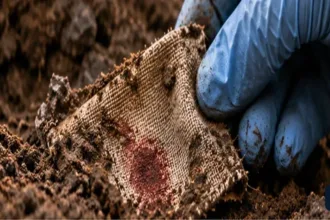
Investigators first identify and document possible sources of biological material, noting location, substrate and circumstances. They select appropriate collection methods, package items to preserve the evidence, maintain a traceable chain of custody and limit unnecessary handling. Collection choices can materially affect later DNA recovery and interpretation. Relevant opportunities for contamination exist both at the scene and throughout the laboratory process.
Related guide: How It’s Done: DNA Evidence Collection.
Step 2 — Examine and select the sample
The laboratory considers the nature of the exhibit, visible staining, relevant background and available sampling strategies. It may employ appropriate biological screening or identification tests. A test indicating a possible biological fluid or tissue component does not automatically identify the person who contributed it. Sample selection should reflect the case questions while limiting unnecessary consumption of scarce material.
Step 3 — Extract and purify DNA
DNA extraction releases nucleic acids from collected cells or tissue, separates DNA from other sample components and prepares material for further analysis. Different extraction chemistries and automation workflows may be suitable for different exhibits. Recovery efficiency, carryover, inhibition and the potential loss of low quantities are relevant performance considerations. Differential approaches may be used for certain mixed biological materials under validated procedures.
Step 4 — Quantify human DNA
Human-specific quantitative PCR (qPCR) methods can estimate the quantity of amplifiable DNA available and, depending on the assay, supply additional indicators such as degradation or PCR inhibition. Laboratories use quantification results to inform downstream decisions. The concentration of extracted DNA is not equivalent to a guaranteed complete STR profile; the assay, sample and downstream system affect what can be recovered.
Related reading: How the Degradation Index Can Inform Forensic DNA Analysis.
Step 5 — Amplify genetic targets
Polymerase chain reaction (PCR) creates many copies of selected genetic targets. A multiplex system amplifies numerous loci together. Validated input ranges, cycles and reaction conditions matter: too little template can increase stochastic variation, whereas excessive input may produce imbalanced or otherwise problematic signals. PCR inhibitors can reduce efficiency, and degraded templates may yield fewer interpretable longer fragments.
Step 6 — Separate or sequence the products
In conventional capillary electrophoresis (CE), fluorescently labelled STR amplicons are separated by size and represented as peaks in an electropherogram. The examiner assigns alleles and evaluates peak height, balance, possible stutter, noise and artifacts according to validated thresholds and interpretation procedures.
Massively parallel sequencing (MPS), often called next-generation sequencing, can read sequence differences within or near STR regions and examine other marker classes. MPS produces data different in character from a conventional length-based profile. Its use requires appropriate analytical and interpretative validation; additional sequence resolution does not eliminate the effects of mixtures, stochastic sampling or contamination.
Step 7 — Interpret the profile
The examiner assesses whether the data support a single-source or mixed profile, identifies limitations, considers plausible artifacts and evaluates the results according to the laboratory’s methodology. Reference profiles may then be compared as permitted by the case context and procedures. Where statistical evaluation is suitable, the strength of findings is assessed using clearly stated competing propositions.
Step 8 — Review and report
Forensic reports should describe tested items, examination outcomes, comparisons, evaluation methods, relevant limitations and conclusions expressed at the appropriate level. Technical and administrative reviews, evidence control, competence, proficiency testing and corrective actions are part of a functioning laboratory quality system.
4. Why do some samples produce weak or partial DNA profiles?
Samples can fail to give complete profiles even when human DNA is detected. The causes are not interchangeable:
| Challenge | What can happen | Interpretation consequence |
|---|---|---|
| Low template amount | Only a small number of copies are available for amplification | Greater stochastic fluctuation, possible allele dropout and variable peak heights |
| Degradation | DNA molecules are broken into shorter fragments | Reduced recovery of longer targets, depending on method and sample |
| PCR inhibition | Chemicals in the extract reduce amplification performance | Weak or failed amplification that may not reflect DNA quantity alone |
| Mixtures | DNA from multiple contributors is present | Overlapping alleles and more complex evaluation, especially for minor contributors |
| Background DNA or contamination | DNA unrelated to the alleged activity is recovered | Potential misinterpretation of relevance, source or mechanism of deposition |
| Limited or compromised sampling | The sampled portion is not representative or has changed during collection/storage | A result may not describe all biological material originally present |
Allelic dropout means an allele expected under a contributor’s genotype is not observed in the analyzed result, often because of stochastic or analytical limitations. Drop-in describes a sporadic unexpected allele signal under the laboratory’s validated models. Stutter peaks and other artifacts require separate characterization; not every unexpected peak reflects a new contributor. These effects are particularly relevant for low-level profiles and mixtures.
For nuanced discussion of variability between laboratories, see Why Identical Touch-DNA Samples Can Yield Different Laboratory Results.
5. Interpreting DNA mixtures
A DNA mixture contains DNA from more than one contributor. Some mixtures are readily interpreted, while others involve multiple contributors at unequal levels, degradation, overlap and stochastic effects. Determining the number of contributors can itself be uncertain. Seeing alleles compatible with a person’s profile within a mixture does not automatically mean that person contributed.
Probabilistic genotyping uses statistical models to evaluate observed DNA evidence under specified contributor hypotheses, often accounting for peak-height behavior, allele dropout, stutter and other defined effects. Validated probabilistic systems can improve evaluation of suitable complex mixtures. They are not infallible: software models, parameters, validation scope, assumptions, analyst decisions and sample quality can affect output.
The 2024 NIST Scientific Foundation Review of DNA Mixture Interpretation assesses scientific foundations, known limitations and needs for further research. For a reader-friendly introduction, the NIST DNA Mixtures explainer is especially useful.
Where a mixture cannot be reliably evaluated within the method’s validated domain, an inconclusive result or qualified reporting may be more appropriate than forcing an apparently definitive association.
6. What do DNA matches, probabilities and likelihood ratios mean?
A forensic DNA comparison is not simply a binary ‘match means guilty’ decision. The strength of an observed correspondence depends on the information in the profile, the hypotheses evaluated, allele or haplotype distributions, relatedness and limitations of the analytical system.
For autosomal STR profiles, a frequency-based evaluation may use suitable population allele data and an appropriate statistical model. The calculation must account for issues such as relatedness and population structure when relevant. For mixtures, probabilistic approaches frequently evaluate how likely the observed data are under competing contributor propositions.
A likelihood ratio (LR) compares the probability of observing the evidence under two propositions: LR = P(evidence | H1) / P(evidence | H2). For example, an LR of 1,000 indicates that the observed findings are 1,000 times as probable under the specified H1 than H2, given the models and assumptions. It is not a 1-in-1,000 probability that a named person is innocent, nor a 99.9% probability of guilt.
An LR near 1 provides little discrimination between the stated propositions; values below 1 favour the alternative proposition. The particular numerical strength is conditional on the propositions, data and modelling assumptions—not a universal property of the exhibit.
Detailed guide: Likelihood Ratios in Forensic Evidence Interpretation. The SWGDAM 2025 Guidelines for Reporting Likelihood Ratios provide relevant professional guidance; SWGDAM guidelines should not be confused with mandatory standards applicable to every jurisdiction.
7. The critical distinction: DNA source versus DNA activity
A sub-source or source-level proposition considers whose DNA or biological material is present. An activity-level proposition considers events that could explain its presence, such as handling an item, direct deposition, or secondary transfer. An offence-level proposition concerns legal actions or culpability and generally requires evidence beyond genetic data.
Consider an example: a DNA profile recovered from a door handle provides strong support for association with Person A. Two possible activities might be that A used the door during an incident, or that A visited the premises earlier. The source-level correspondence cannot, by itself, resolve when, why or how the deposit occurred.
Other relevant considerations include transfer, persistence, prevalence and recovery. DNA can move between people and objects through direct or indirect contact. Whether a trace survives and is recovered depends on numerous contextual factors. Interpreting a profile at an activity level therefore requires an appropriately supported, case-relevant evaluation rather than a general statement that DNA ‘proves presence’.
For further reading: The Forensic Propositions Hierarchy; The 2-Hour Window: DNA Transfer and an Alternative Explanation; and DNA Transfer and Activity-Level Modelling.
8. Y-STRs, mitochondrial DNA, SNPs and emerging technologies
Y-chromosome STR analysis
Y-STR profiling examines a combination of markers transmitted through the paternal lineage. It can be especially informative when searching for a male genetic component in complex biological material. However, paternal relatives may share the same Y-STR haplotype, so an association ordinarily cannot identify one unique male individual within that lineage. Appropriate haplotype-frequency and population-structure methods matter. Consult the ISFG DNA Commission Y-STR interpretation recommendations and SWGDAM Y-STR guidance.
Simply Forensic article: Y-Chromosome DNA Analysis and Paternal Ancestry.
Mitochondrial DNA
Mitochondrial DNA is present in numerous copies per cell and is predominantly maternally inherited. It is often considered for challenging samples, including some old, degraded or limited biological materials. Because maternally related individuals may share mtDNA haplotypes, a mitochondrial result must be interpreted using suitable population data and lineage-related considerations. HeteroplasmyThe presence of more than one mitochondrial DNA sequence variant within an individual or sample, including sequence or length heteroplasmy. and sequence nomenclature can also affect reporting.
Detailed guides: mtDNA versus Nuclear DNA and Short-Read versus Long-Read mtDNA Sequencing.
Kinship testing and investigative genetic genealogy
Kinship analysis evaluates the extent to which genetic data support competing biological relationship propositions. Paternity, missing-person identification and disaster victim identification are examples. Results must account for alternative relationships, mutations, marker systems and appropriate population data.
Investigative genetic genealogy combines suitable SNP information with genealogical research to generate investigative leads under applicable policies and laws. A genealogical lead is not, by itself, the same as a laboratory-confirmed identification or a judicial finding. Related guide: Forensic Kinship and Paternity Testing.
Research directions
Sequence-based STRs, microhaplotypes, new SNP panels, methylation-based age estimation, rapid DNA and other innovations may expand forensic capabilities. Their value depends on the investigative purpose, evidence type, validation, reproducibility and ethical or legal constraints. A promising publication is not proof of routine operational suitability.
Read Forensic Epigenetics and Age Estimation and Rapid DNA Technology in Forensics. For research context, see Butler’s INTERPOL Review of Forensic Biology and DNA, 2023–2025 (published 2026).
9. Quality assurance, validation, contamination control and human factors
Reliable forensic DNA work depends on validated analytical methods, competent personnel, suitable reference materials, documented procedures, appropriate controls, evidence security, traceability, peer or technical review, proficiency testing and effective corrective action. ValidationValidation, often referred to as method validation, is a crucial process in the laboratory when introducing a new machine, technology, or analytical technique. It involves Read Full Definition must cover intended evidence types, analytical and software behavior, limits of detection or interpretation, uncertainty and relevant error mechanisms.
ContaminationContamination - The unwanted transfer of material from another source to a piece of physical evidence. The inadvertent touching of a weapon, thereby adding fingerprints Read Full Definition can arise during evidence collection, transport, examination or amplification. It can also originate from materials or background DNA deposited before the incident. Laboratories address these risks using physical separation, clean workflows, elimination data where appropriate, negative and positive controls and documented assessments. See Forensic DNA Contamination Control: A Quality Assurance Guide.
As of October 2026, key United States resources include the FBI Quality Assurance Standards for Forensic DNA Testing Laboratories (effective July 1, 2025) and SWGDAM’s interpretation and probabilistic genotyping guidance, including 2025 guidance for probabilistic genotyping and LR reporting. The FBI document is a US-specific quality framework; SWGDAM documents are guidance and not, simply by being published, mandatory laboratory standards everywhere.
NIST’s 2024 Human Factors in Forensic DNA Interpretation report further addresses the risk of errors associated with cognitive, technical and organizational influences. Quality is not confined to the instrument: decisions about sampling, analytical thresholds, interpretation, data management and reporting all matter.
Professional requirements differ by jurisdiction. For example, the UK Forensic ScienceDiscover the fascinating field of Forensic Science, the application of scientific principles to legal matters. This post delves into its many disciplines, from DNA analysis Read Full Definition Regulator has published DNA mixture interpretation guidance and 2026 autosomal relationship-testing guidance.
10. Where is forensic DNA analysis used?
- Criminal investigations: comparing profiles or evaluating evidential hypotheses in sexual assault, homicide, assault, burglary or other matters where biological material is relevant.
- Missing-person and disaster victim identification: comparing remains with personal items, family references or databases under appropriate governance.
- Kinship and relationship testing: evaluating specified biological relationships, including paternity or more distant kinship.
- Exonerations and case reviews: reconsidering existing interpretations or testing previously unanalyzed material when scientifically and legally appropriate.
- Investigative leads: database searching and, where permitted, investigative genetic genealogy; any lead requires suitable follow-up.
A case example: touch DNA on a shared object
Imagine a knife recovered from a kitchen shared by several residents. Analysts recover a low-level mixed DNA profile from the handle. One resident’s reference profile is compatible with part of that mixture and a validated probabilistic system reports an LR that favours that person’s contribution under specified source-level hypotheses.
That result may be valuable, but the knife’s ordinary use, background DNA, cleaning, transfer, sampling and handling history affect whether the finding can assist in deciding who used it during an alleged incident. A properly framed report separates the source-level evaluation from claims about activity or guilt. It also explains any uncertainty about the number of contributors and limitations caused by low-level data.
The case example is hypothetical and does not describe an actual criminal investigation.
11. Structured learning library: explore each part in depth
Use this sequence as a forensic DNA mini-course. The links below lead to existing Simply Forensic articles rather than copies of the same material.
Level 1 — Evidence and basic techniques
- Collection and preservation of DNA evidence — scene-to-laboratory decisions.
- STR analysis — repeat markers, amplification and profiles.
- DNA quality and degradation index — quantity, quality and amplification.
Level 2 — Interpretation and evidence evaluation
- Why touch-DNA outcomes differ between laboratories — reproducibility and method choices.
- Likelihood ratios explained — the proper meaning of numerical support.
- Forensic propositions — source, activity and alleged offence.
- Contamination prevention and quality assurance — controls and good practice.
Level 3 — Specialist and emerging analysis
- Y-chromosome and paternal-line testing — haplotypes and relatedness.
- Mitochondrial versus nuclear DNA — lineage and degraded samples.
- Kinship and paternity testing — genetic relationship propositions.
- Forensic epigenetics — research methods for age estimation.
- Short-read and long-read sequencing — emerging mtDNA analysis technologies.
12. Frequently asked questions
Can forensic DNA always identify an individual uniquely?
No. An adequately informative autosomal STR profile can be highly discriminating, but identical twins, biological relatedness, partial profiles, mixtures and technical limitations must be considered. Lineage markers are shared among many relatives.
Can DNA evidence show exactly when a person touched something?
Usually not on its own. Detecting DNA does not directly provide a timestamp; persistence, prior use and transfer pathways require additional case evidence.
Does finding someone’s DNA prove they committed a crime?
No. Attribution of biological material and a legal conclusion about a person’s actions are different propositions.
Does a negative DNA result mean no contact occurred?
No. DNA may never have been deposited, may not have persisted or may not have been sampled or detected. The meaning depends on the circumstances and methods.
Are DNA mixture interpretation programs always accurate?
No method is universally reliable in every circumstance. Suitability depends on mixture complexity, quantity, quality, software validation, relevant hypotheses and the reporting framework.
Is the same DNA profile used for identification, genealogy and ancestry inference?
Not necessarily. Different applications use different marker systems, databases, algorithms and assumptions. One type of profile does not automatically supply all the information needed for another task.
13. Scientific standards and primary references
- Butler JM, Iyer H, Press R, Taylor M, Vallone P, Willis S. (2024). DNA Mixture Interpretation: A NIST Scientific Foundation Review. National Institute of Standards and Technology.
- SWGDAM. (2021–2025). Interpretation Guidelines for Autosomal STR Typing; Guidelines for the Use of Probabilistic Genotyping (2025); Guidelines for Reporting Likelihood Ratios (2025); Y-STR and mtDNA guidance. Scientific Working Group on DNA Analysis Methods.
- Federal Bureau of Investigation. (2025). Quality Assurance Standards for Forensic DNA Testing Laboratories, effective July 1, 2025.
- Taylor M, Romsos E, Ballantyne K, Moore Boswell D, Busey T. (2024). Forensic DNA Interpretation and Human Factors: Improving the Practice Through a Systems Approach. NIST IR 8503.
- Roewer L, et al. (2020). ISFG DNA Commission: Recommendations on the interpretation of Y-STR results in forensic analysis. Forensic Science International: Genetics 48:102308.
- Forensic Science Regulator. (2024). DNA Mixture Interpretation (FSR-G-222).
- Forensic Science Regulator. (2026). Autosomal DNA Relationship Testing (FSR-GUI-0014).
- Butler JM. (2026). INTERPOL Review of Forensic Biology and DNA, 2023–2025. Forensic Science International: Synergy 13.
- FBI. CODIS and NDIS Fact Sheet: core loci, specimen categories and database requirements.
Editorial note: Guidelines, statutory obligations and accreditation requirements vary. The references are a starting point for scientific verification, not a claim that the same rule is binding everywhere. Consult current editions and the requirements applicable to the laboratory or jurisdiction.
Continue learning: Explore the Forensic Academy for structured learning paths or the Forensic Methods & Practice hub for other laboratory disciplines.