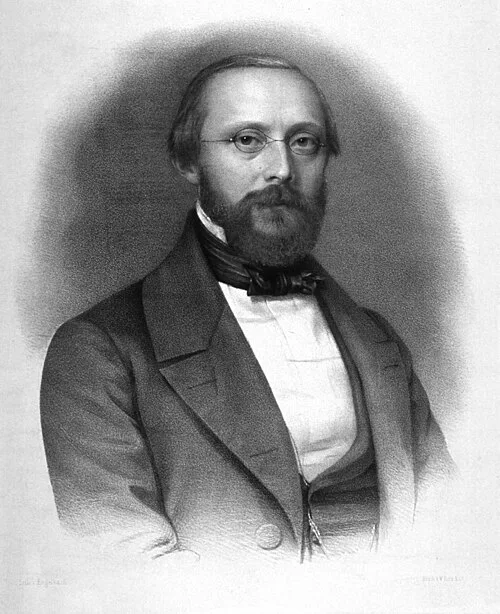
Rudolf Virchow helped transform postmortem examination from a largely descriptive practice into a more systematic branch of pathology. His cellular pathology lectures and his 1876 autopsyAn autopsy, also known as a post-mortem examination or necropsy (when performed on animals), is a thorough and systematic medical procedure that involves the examination of a deceased person's body, typically to determine or confirm Read Full Definition manual influenced how physicians examined disease and documented findings, including in medicolegal work. The history is more nuanced than the familiar label “father of pathology” suggests.
- The autopsy before modern forensic pathology
- Who was Rudolf Virchow?
- The cellular pathology revolution of 1858
- A practical manual for postmortem examinations
- Why documentation matters in a death investigation
- The second protocol and the limits of historical authority
- What changed after Virchow?
- Myths and realities about Virchow’s legacy
- What forensic students should remember
- Frequently asked questions
- References and further reading
Key Takeaways
Virchow strengthened the methods and documentation of pathology, but did not invent the autopsy or modern forensic medicine.
- Virchow’s 1858 cellular pathology lectures helped establish the study of disease at the cellular level.
- His 1876 postmortem manual documented an orderly examination method with medicolegal relevance.
- Autopsy practices and the underlying cell theory developed through contributions from multiple investigators.
- Historical protocols are evidence
 Evidence is any form of proof, such as objects, materials, or scientific findings, presented to establish or disprove a fact in a legal proceeding. It is used to reconstruct events and link or exclude individuals Read Full Definition of a discipline’s development, not substitutes for current validated forensic procedures.
The autopsy before modern forensic pathology
An autopsy is more than an examination of a body. In a medicolegal investigation, it is a documented attempt to answer specific questions: what injuries or diseases are present, what may have caused death, and which observations can be distinguished from interpretation. Those distinctions were not invented by one physician. Anatomical dissection and postmortem examination had long histories before the nineteenth century. What changed during that century was the increasing expectation that pathological findings should be recorded systematically, examined microscopically when appropriate, and interpreted alongside clinical and investigative information.
Rudolf Virchow (1821–1902), a German physician and pathologist, contributed to that transformation. His importance to forensic medicine is sometimes overshadowed by his better-known work in cellular pathology. Yet his published method for examining bodies at Berlin’s Charité hospital provides unusually direct evidence of how pathology and medicolegal practice intersected.
Who was Rudolf Virchow?
Virchow trained and worked in a period when medicine was changing from explanations centred mainly on organs or bodily fluids toward investigations of tissues and cells. He became associated with Berlin’s pathological institute and helped establish pathology as a discipline built around observable anatomical changes. His scientific work extended across inflammation, vascular disease, public health and the study of cells.
His career also crossed into politics and social medicine. He argued that disease and health could not be understood apart from living conditions and institutions. That broader perspective is worth remembering when describing him as a forensic pioneer: he was not simply a specialist who performed autopsies, but a physician concerned with how evidence should inform decisions about individuals and populations.
Calling Virchow the sole founder of forensic pathology would erase earlier anatomists, medical jurists and pathologists. His defensible historical contribution lies in the documentation and dissemination of particular methods, not in inventing examination of the dead.
The cellular pathology revolution of 1858
In 1858 Virchow delivered lectures in Berlin that became Die Cellularpathologie, published that year. He argued that the study of disease required attention to cellular changes rather than relying exclusively on descriptions of organs or speculative disturbances of bodily fluids. The book was translated into English and circulated internationally.
For a forensic reader, this shift matters because gross appearances and microscopic findings answer different questions. An organ may look abnormal, but a tissue section can reveal processes that are not obvious to the naked eye. Conversely, microscopic changes must be interpreted in context; they do not automatically reveal a unique cause or manner of deathA medicolegal classification of circumstances surrounding death, often grouped as natural, accident, suicide, homicide or undetermined..
Virchow is commonly linked to the phrase omnis cellula e cellula, meaning that cells arise from pre-existing cells. The history of this idea is more complicated than a single quotation suggests. Robert Remak had published important observations about cell division before Virchow’s influential lectures. A fair account acknowledges Virchow’s role in popularising cellular pathology without assigning him exclusive credit for every underlying discovery.
The original 1858 edition is preserved by the Wellcome Collection, and an English translation is available through the Library of Congress. These historical editions allow readers to distinguish what Virchow actually argued from later summaries.
A practical manual for postmortem examinations
In 1876 Virchow published a description of the postmortem technique used at the Charité hospital. The English-language edition explicitly referred to medicolegal practice. This is a stronger basis for discussing his forensic contribution than a general claim that he made autopsies scientific.
The manual presented postmortem examination as an ordered procedure. The examiner was expected to expose and assess anatomical structures carefully rather than collect only striking abnormalities. The practical value of such a method is consistency: when observations are recorded in a reproducible sequence, another physician can better understand what was examined, what was found and what may have been missed.
A structured autopsy also protects against a common interpretive error: assuming that the first conspicuous abnormality must explain death. An injury, disease or unusual appearance may be significant, incidental or altered by postmortem change. A complete examination gives the pathologist a better opportunity to consider alternatives.
The original book is not a modern forensic pathology standard. It belongs to a historical medical and legal setting, with instruments, terminology and expectations that differ from contemporary practice. Its lasting value is methodological rather than a claim that every nineteenth-century technique should still be followed.
Why documentation matters in a death investigation
A modern medicolegal autopsy involves a chain of decisions: identifying the deceased, reviewing circumstances, examining the body, collecting specimens, documenting injuries and integrating laboratory findings. Not all steps can be completed by a single specialist. Scene investigators, toxicologists, histologists and law-enforcement personnel may each contribute information.
Virchow’s emphasis on an ordered examination anticipates one part of that workflow. Documentation permits later review, including when a preliminary impression changes after toxicology, histology or additional records become available. A description such as “dark discoloration of tissue” is an observation; assigning it to a particular disease or injury mechanism is an interpretation that may require more evidence.
Forensic reporting must also separate cause of deathThe cause of death refers to the specific injury, disease, or underlying condition that directly leads to an individual's demise. It is a critical determination made by medical professionals, such as Medical Examiners or Coroners, Read Full Definition from manner of death. The cause concerns the disease or injury responsible for death, while manner is a medicolegal classification informed by the circumstances. An autopsy alone may be insufficient to settle manner, particularly when the same physical findings could arise under different circumstances.
These principles should not be attributed entirely to Virchow. They illustrate why his systematic approach remains relevant when studying the historical development of forensic examination.
Historical context
The second protocol and the limits of historical authority
Historical techniques deserve scrutiny rather than automatic admiration. A 2024 review in the American Journal of Forensic Medicine and Pathology examined one of Virchow’s published autopsy protocols in its nineteenth-century regulatory context. The review notes that the protocol later attracted severe criticism and considers how its reasoning holds up against modern expectations.
This is a useful reminder that a respected pioneer can advance a field without producing a timeless or flawless procedure. Some decisions that appeared reasonable in one era may be revised when new anatomy, laboratory methods, safety practices or evidentiary requirements emerge.
A historian should ask what a protocol was designed to accomplish and what information was available to its author. A present-day examiner must ask a different question: whether a technique is appropriate under current scientific evidence, professional guidance, accreditationAccreditation – a process by which a laboratory must prove to an accrediting agency that their processes, equipment, and employees are competent, credible, and accurate. The accrediting agency will inspect the laboratory and observe its Read Full Definition requirements and local law. Historical influence is not itself a validationValidation, often referred to as method validation, is a crucial process in the laboratory when introducing a new machine, technology, or analytical technique. It involves a series of systematic steps and assessments to ensure that Read Full Definition study.
What changed after Virchow?
Microscopy, histology, toxicology, microbiology and later molecular methods broadened what postmortem examinations could reveal. A body examination that once relied heavily on visible anatomy could increasingly incorporate tissue sections, chemical testing, imaging and specialist consultation. These methods do not always provide a single definitive answer; their usefulness depends on specimen quality, sampling, interpretation and the question being asked.
The modern autopsy also developed in different legal systems. Coroners, medical examiners, forensic pathologists and judicial authorities do not all have identical responsibilities. An approach described for a nineteenth-century Berlin hospital cannot be mapped directly onto every contemporary jurisdiction.
Still, the historical continuity is visible. Good practice requires a coherent examination plan, careful records, awareness of uncertainty and conclusions proportionate to the evidence. Those are enduring scientific habits even as specific techniques evolve.
Myths and realities about Virchow’s legacy
Myth
Virchow invented the autopsy.
Reveal the reality
Reality
Postmortem examinations were practised for centuries before Virchow. He helped formalise and disseminate systematic pathological examination.
Myth
Virchow alone discovered that cells come from other cells.
Reveal the reality
Reality
Virchow popularised cellular pathology, but Robert Remak made earlier contributions to understanding cell division.
Myth
His nineteenth-century autopsy protocol is still the forensic standard.
Reveal the reality
Reality
The protocol is historically important, but contemporary medicolegal autopsies follow current professional methods and legal requirements.
Myth
Microscopy alone determines the cause and manner of death.
Reveal the reality
Reality
Microscopy may clarify disease processes. Cause and manner of death require integration of anatomical findings with laboratory results and case circumstances.
What forensic students should remember
Virchow’s most important contribution was not a dramatic courtroom revelation. It was helping make pathology an observational and teachable discipline. His 1858 lectures strengthened the cellular interpretation of disease, while his 1876 postmortem manual documented a systematic examination technique with explicit medicolegal relevance.
Three cautions belong alongside that legacy. First, autopsy practice predates Virchow. Second, cellular theory has a shared intellectual history, including Robert Remak’s earlier work. Third, a historical protocol must be evaluated against modern standards before it is used in present-day practice.
Forensic science Discover the fascinating field of Forensic Science, the application of scientific principles to legal matters. This post delves into its many disciplines, from DNA analysis to crime scene investigation, its importance in the justice system, Read Full Definition advances when methods are recorded, challenged and improved. Virchow’s career is a particularly clear example of why the history of a method should include both its achievements and its limitations.
Frequently asked questions
Frequently Asked Questions
Did Rudolf Virchow invent forensic autopsies?
No. Autopsies and medicolegal examinations predate Virchow. His contribution included documenting a systematic postmortem procedure and advancing pathological interpretation.
What did Virchow publish in 1858?
He published Die Cellularpathologie, based on lectures about disease processes at the cellular level. The work influenced pathology and the interpretation of tissue changes.
Why is Virchow’s 1876 autopsy manual important?
It describes an organised examination method used at the Charité hospital, including medicolegal considerations, and provides a historical record of evolving pathology practice.
Is the Virchow method used unchanged in modern forensic pathology?
No. Historical procedures must be evaluated against modern professional guidance, scientific evidence, safety measures and jurisdiction-specific legal requirements.
Can an autopsy alone establish manner of death?
Not always. Manner of death is a medicolegal determination that often requires investigative context alongside the autopsy findings, toxicology, histology and other evidence.

References and further reading
References & Sources
Show referencesHide references
- Virchow R. A Description and Explanation of the Method of Performing Post-Mortem Examinations (1876). Wellcome Collection. Source
- Virchow R. Die Cellularpathologie (1858). Wellcome Collection. Source
- Virchow R. Cellular Pathology, English translation. Library of Congress. Source
- Hansma P. Virchow’s Second Protocol: A 21st-Century Review. American Journal of Forensic Medicine and Pathology (2024). Source
- A Brief History of Pathology. Virchows Archiv (2010). Source
Featured image: Historical portrait of Rudolf Virchow, via Wikimedia Commons (public domain).