
Identification outcome: For 26 years, a man recovered from Lake Stickney in Washington state in 1994 was unidentified. On 4 August 2020, authorities confirmed his identity. This used a combination of genealogical leads and family-reference DNADNA, or Deoxyribonucleic Acid, is the genetic material found in cells, composed of a double helix structure. It serves as the genetic blueprint for all Read Full Definition testing. The confirmation drew on comparing genetic data with public and private records.
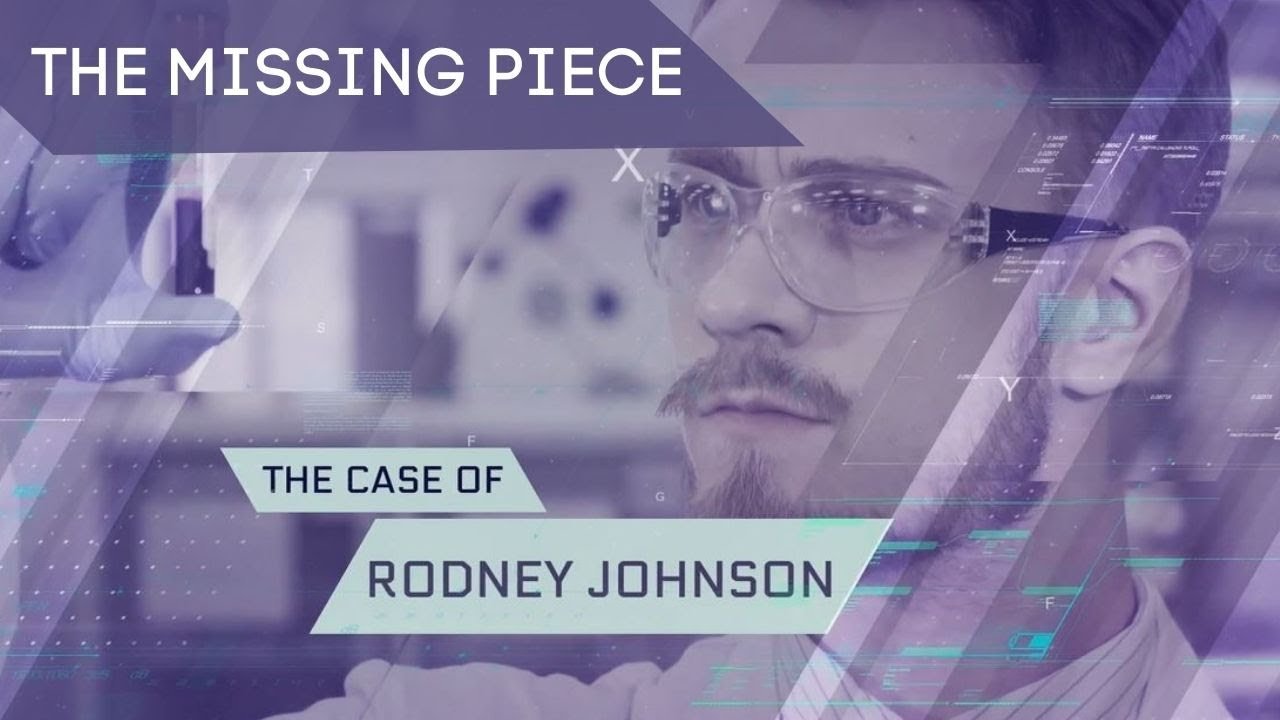
- Watch Episode 3: The Missing Piece
- Lake Stickney John Doe: the original evidence
- Why ordinary DNA searches did not identify him
- Tooth DNA, degradation and contamination
- From GEDmatch relative to confirmed identity
- What happened to Rodney?
- Forensic interpretation lessons
- Why the episode matters
- Frequently asked questions
- References and video credits
- More videos in this series
His death was investigated as a homicide because the forensic examination identified a gunshot wound to the head. Rodney Johnson Lake Stickney DNA helped authorities confirm the identity.
Watch Episode 3: The Missing Piece
Original video credit: ISHI News and Othram. The editorial analysis on this page was independently prepared by Simply Forensic.

Lake Stickney John Doe: the original evidence
On 11 June 1994, fishermen found the body of a man in Lake Stickney, near Everett in Snohomish County, Washington. Decomposition and the condition of the remains complicated identification. An autopsy revealed a gunshot wound to the head. The man became known locally as Lake Stickney John Doe.
Over the next two decades investigators compared missing-person reports, reviewed dental evidence, prepared facial reconstructions and sought conventional genetic matches. These efforts did not establish his identity. The Snohomish County Medical Examiner’s Office maintained records of exclusionary examinations and the development of the case, an important foundation for later work.
Why ordinary DNA searches did not identify him
Conventional forensic STR analysis can successfully produce a DNA profile yet return no useful known-person match. CODIS and other identification databases depend on the individuals and reference profiles that are actually represented. For an unidentified deceased person, the absence of a relevant missing-person or family-reference comparison can leave a valid genetic profile unresolved.
Investigators explored a genealogy route, but biological material from long-submerged skeletal remains posed analytical challenges. The original STR profile could not simply be submitted to a SNP-oriented genealogy service: the systems use different genetic markers and data formats.
Tooth DNA, degradation and contamination
According to the county’s detailed case history, additional material, including teeth, was sampled as specialists tried to recover enough human DNA for genealogy. DNA Solutions extracted very low amounts of human DNA, one of which Othram later successfully analyzed. The county reported a sample of roughly 0.2 nanograms of human DNA and approximately 98% bacterial DNA in the material under discussion.
This detail demonstrates why total DNA concentration can mislead. In skeletal or environmentally exposed remains, a substantial fraction of DNA may come from microorganisms. A useful genealogy-oriented profile requires informative human genetic data after appropriate extraction, quality assessment and sequencing. Low human fraction is a challenge rather than proof that sequencing must fail; the achievable result depends on the sample, method and validation.
From GEDmatch relative to confirmed identity
In May 2020, genetic information generated from a tooth-derived extract was searched on GEDmatch. The result included a reported first-cousin match, which enabled investigators to reconstruct a relevant family tree. Information from the family prompted renewed consideration of Rodney Peter Johnson, who had been missing since the late 1980s.
The investigating agencies then obtained voluntary reference DNA from close relatives, including his father and brother. Those comparisons confirmed the identification on 4 August 2020. This final step deserves emphasis: the genealogy result suggested a likely identity, while the subsequent reference testing verified the inference.
What happened to Rodney?
Identification answered who was recovered from the lake but did not itself identify a killer. Authorities believed Rodney went missing around 1987–1988. His remains had been in the lake for years before discovery, and the gunshot injury supported a homicide investigation. The original investigative materials urged people who knew Rodney or his movements to provide information. This article does not claim a subsequent conviction without a verified source.
Forensic interpretation lessons
- Use an appropriate substrate: teeth and dense skeletal elements can retain DNA where softer tissues are no longer available.
- Distinguish human DNA from background: bacterial contamination affects useful yield and bioinformatic quality control.
- Avoid universal sensitivity claims: success with one difficult sample does not establish that all similarly degraded samples can be resolved.
- Keep methods distinct: STR identification, genome-wide SNP analysis, relative matching and confirmatory kinship testing are separate stages.
- Maintain the case record: earlier exclusions, dental work and missing-person records remain valuable when a new lead emerges.
Why the episode matters
Rodney Johnson’s identification is a clear teaching example of investigative genealogy used for human remains rather than offender identification. The same basic genetics can be deployed for very different questions. Here, recovering a person’s name allowed authorities and his family to reconnect the remains with a missing-person history and resume inquiries into the homicide.
Frequently asked questions
How was Rodney Peter Johnson identified?
A tooth-derived DNA extract enabled genome-wide genealogy analysis. Investigators followed a relative match and confirmed the identity with reference samples from close family members.
Why was the DNA sample difficult to analyze?
It contained a very small amount of human DNA and a substantial amount of bacterial DNA. Environmental exposure and degradation complicated the workflow.
Did the identification solve the homicide?
It established the identity of the previously unnamed deceased man. It did not, by itself, identify or convict his killer.
References and video credits
- Snohomish County Medical Examiner, detailed Rodney Peter Johnson case history
- Snohomish County Sheriff’s Office, identification press release (12 August 2020)
- ISHI News, original The Missing Piece series producer
- National Institute of Justice, forensic genealogy technology overview
The Missing Piece is an ISHI News/Othram production. This is independent Simply Forensic forensic case commentary, not a transcript or an official account from the filmmakers. Reviewed 15 November 2026.