Case update (15 November 2026): The original episode covers the 1995 murder of Texas teacher Mary Catherine Edwards and the 2021 arrest and indictment of Clayton Bernard Foreman. The case subsequently went to trial: on 20 March 2024 Foreman was convicted of capital murder and sentenced to life imprisonment. Trial testimony also reconsidered an earlier forensic-pathology assessment of the cause of death.
- Watch The Missing Piece — Episode 6
- Mary Catherine Edwards and the original investigation
- How the genealogy investigation developed a lead
- Mixture evidence and source-level interpretation
- Why the original cause-of-death description needs correction
- What happened in court?
- Lessons for forensic DNA practice
- Frequently asked questions
- Sources and video credits
- Explore the series
Watch The Missing Piece — Episode 6
Original video: ISHI News in collaboration with Othram. Embedded for viewing; independently written case analysis appears below.
Mary Catherine Edwards and the original investigation
Mary Catherine Edwards was a 31-year-old schoolteacher living in Beaumont, Texas. On 14 January 1995, her family found her dead at home after being unable to reach her. Investigators documented sexual assault evidence and collected material for forensic DNADNA, or Deoxyribonucleic Acid, is the genetic material found in cells, composed of a double helix structure. It serves as the genetic blueprint for all Read Full Definition testing. Contemporary laboratory methods allowed comparisons to individuals under investigation, but did not produce a definitive lead identifying an offender.
As years passed, investigators retained case evidence and revisited it as DNA technologies progressed. The persistence of the investigation matters: a genetic result can only help when the source material, its collection history and relevant comparison samples can still be assessed decades later.
How the genealogy investigation developed a lead
In 2020, Beaumont investigators and Texas Rangers pursued an investigative genetic genealogy approach with Othram. In broad terms, this method develops genome-wide genetic information suitable for finding potential relatives in permitted genealogy databases. Investigators and genealogists then combine candidate relationships with records and traditional detective work to narrow the possible source of DNA.
The genealogy work focused investigators on Foreman, who had known Edwards years earlier. That connection, by itself, was not proof of involvement. Investigators had to pursue appropriate direct comparisons and evaluate other case evidence. A genealogical match is a lead-generation tool, not an alternative verdict of guilt.
Mixture evidence and source-level interpretation
At Foreman’s 2024 trial, forensic testimony addressed DNA from the original case and comparisons involving several individuals. Reporting described mixture interpretation in terms of likelihood ratios rather than a simplistic yes-or-no “DNA match.” This distinction is scientifically important. A mixed DNA profile contains contributions from more than one person, and an LR compares the probability of the observed data under specified competing propositions. It is not the probability that a defendant is guilty.
A forensic scientist assessing such results must consider contributor number, allele sharing, potential dropout, stutter and the quality of the original data. In court, source-level support from a DNA comparison also remains distinct from the activity-level question of how and when biological material was deposited.
Why the original cause-of-death description needs correction
Early reports described Edwards’s death as drowning. During the March 2024 trial, forensic pathologist Charles Harvey, who had performed the original autopsy, testified that entrapment asphyxiation better explained the death than the earlier drowning conclusion. Beaumont Police Department’s 2024 annual report characterized the investigation as involving sexual assault and strangulation.
These sources are not identical in terminology. A careful educational article should not state a single mechanism as unchallenged fact or infer it solely from the position of a body near a bathtub. The appropriate description is that forensic testimony revised the earlier opinion and that the homicide circumstances were evaluated at trial.
What happened in court?
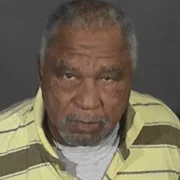
Clayton Bernard Foreman was arrested in April 2021. The Texas Department of Public Safety’s cold-case record confirms that a Jefferson County jury found him guilty of capital murder on 20 March 2024 and that he received a life sentence. This is a confirmed judicial outcome, unlike the suspect-focused wording in the older episode description.
Lessons for forensic DNA practice
- Preserve and document evidence: later tests depend on traceable storage, sample identity and contamination controls.
- Keep genealogy and comparison distinct: a family-tree lead is followed by independent casework and appropriate DNA comparisons.
- Present mixtures accurately: explain what LR propositions address, and avoid treating an LR as a direct probability of guilt.
- Consider the whole scene: DNA findings and pathology opinions answer different questions, and both may evolve as cases are reviewed.
- Report case outcomes correctly: an arrest or indictment is not a conviction; this case reached a verdict in March 2024.
Frequently asked questions
Was Clayton Foreman convicted?
Yes. Texas DPS reports a capital-murder conviction on 20 March 2024 and a life sentence.
Did genealogy itself prove Foreman committed the crime?
No. Genealogy helps develop leads; the case proceeded on investigative, forensic and courtroom evidence examined during trial.
Was Mary Catherine Edwards’s cause of death drowning?
It was originally described that way, but trial testimony in 2024 revised the pathologist’s assessment toward entrapment asphyxiation. Sources use differing terminology, so the distinction should remain visible.
Sources and video credits
- Texas Department of Public Safety, Mary Catherine Edwards case and 2024 conviction
- Beaumont Police Department, 2024 annual report (case summary)
- Beaumont Enterprise, trial pathologist revisits cause of death (13 March 2024)
- Beaumont Enterprise, forensic DNA mixture testimony (18 March 2024)
- US Department of Justice, forensic genealogy as an investigative technique
The Missing Piece is an ISHI News and Othram video project. This article is original commentary by Simply Forensic, not the official episode transcript or an endorsement by the producers. Updated 15 November 2026.
Explore the series
Visit the complete The Missing Piece video-series guide.
- Episode 1: Carla Walker
- Episode 2: Lisa Todd
- Episode 3: Rodney Johnson
- Episode 4: Shawna Beth Garber
- Episode 5: Darrell Splett