Case status: In August 2021, Glen McCurley pleaded guilty to the 1974 murder of 17-year-old Carla Walker and received a life sentence. He died in prison in 2023. This original ISHI video documents how preserved crime-scene evidence and advances in forensic DNADNA, or Deoxyribonucleic Acid, is the genetic material found in cells, composed of a double helix structure. It serves as the genetic blueprint for all Read Full Definition testing helped reopen a case that had remained unresolved for decades.
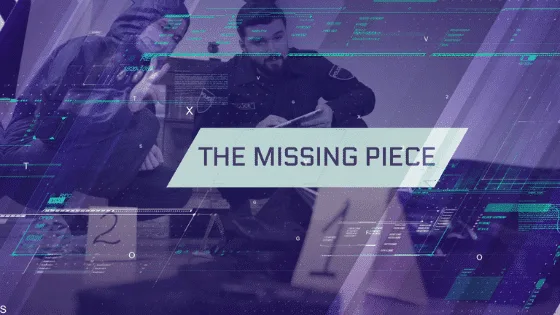
Watch Episode 1 of The Missing Piece
Video credit: Original episode from ISHI News, produced in collaboration with Othram. The accompanying analysis below is independently written for Simply Forensic.
Carla Walker and the 1974 investigation
Carla Walker was abducted in Fort Worth, Texas, after attending a Valentine’s Day dance in February 1974. Her boyfriend was assaulted during the abduction. Investigators located Carla’s body several days later, and the case became one of the city’s enduring unsolved murders.
Although detectives investigated potential suspects and retained forensic evidence, the laboratory methods of the time could not provide a conclusive DNA lead. The case illustrates an important principle in cold-case science: a sample that cannot answer a question with one generation of testing may become informative later if the material is documented, preserved and suitable for reanalysis.
The forensic breakthrough
When Fort Worth police revisited the investigation, they focused on biological material recovered from Carla’s clothing. Conventional STR profiling and genealogy-oriented DNA analysis serve different purposes. STR results may support direct comparison with a reference sample; genome-wide SNP information can help investigators identify potential biological relatives when no known-person match is available in a conventional database.
In 2020, investigators worked with Othram on further analysis. Genetic genealogy and historical research contributed to an investigative focus on Glen McCurley. Detectives then used additional casework and DNA comparisons to assess whether he could be associated with the preserved evidence. It would be incorrect to describe a database-relative match alone as proof of his identity or culpability.
This distinction was consequential in court. Genealogy generated an investigative pathway, while prosecutors had to present legally admissible evidence concerning the original forensic material, later comparisons and McCurley’s statements. Scientific conclusions also require careful consideration of biological material, its evidential relevance, and the circumstances of collection.
The court outcome: what changed after the episode?
In September 2020, McCurley was arrested. His trial began in August 2021, but he changed his plea to guilty on 24 August and was sentenced to life imprisonment. Reporting from the court described DNA evidence and a recorded police interview in which he admitted killing Carla. McCurley died in prison in July 2023.
The distinction between arrest, charge, guilty plea and conviction matters when maintaining a case-study article. Early video descriptions naturally reflect the state of the investigation at publication, but a current educational page should incorporate later documented developments.
What forensic scientists can learn
- Preserve old exhibits thoughtfully: sample suitability may improve as extraction, amplification and sequencing techniques advance.
- Document the original exhibit: DNA results cannot be separated from collection, packaging, handling, storage and the possibility of contamination.
- Distinguish genetic markers: STR profiling and SNP-based genealogy differ in resolution, databases, interpretation and intended output.
- Protect third-party privacy: a person whose DNA resembles the unknown profile may be a relative and not a suspect.
- Confirm the lead: a genealogical hypothesis should prompt independent testing and investigation rather than replace them.
Where scientific interpretation needs caution
A successful cold-case prosecution does not demonstrate that every degraded sample can produce a usable SNP profile, nor does it make direct comparison unnecessary. Results depend on available DNA quantity and quality, contributors, degradation, analytical controls and the genealogy database’s coverage. Contextual evidence remains necessary to address who deposited DNA, and what that finding means in the crime.
For a broader explanation, see our SNP and forensic genetic genealogy guide and the US Department of Justice guidance cited below.
Frequently asked questions
What solved the Carla Walker case?
Reanalysis of preserved evidence, forensic DNA testing, genetic genealogy and further police investigation led investigators to McCurley, who pleaded guilty in 2021.
Was the investigative genealogy match presented as direct proof?
No. Genealogical results identify potential relatives and investigative leads. The underlying forensic DNA evidence and subsequent investigation must be independently evaluated.
What happened to Glen McCurley?
He pleaded guilty to capital murder in August 2021, received a life sentence and died in prison in July 2023.
Sources and further reading
- ISHI News, The Missing Piece Episode 1 (2021)
- Associated Press via KERA, guilty plea and life sentence (2021)
- Fort Worth Star-Telegram, death of Glen McCurley in prison (2023)
- Othram, retrospective discussion of the Carla Walker case
- National Institute of Justice, FGG technology overview
The Missing Piece is an original ISHI News/Othram video series. This page is independent Simply Forensic case commentary, not an official episode transcript. Reviewed 15 November 2026.
Continue watching
Return to the complete The Missing Piece series guide or explore another case: