Research at a glance
Supervised machine learning enables forensic microbiome source attribution in soil and touch samples with evidence-type-specific relic DNA effects
Study summary
Controlled 16S rRNA microbiome classification tested soil traces from four locations and paired human touch samples.
Critical appraisal
- Limitations
- High soil accuracy is study-specific; touch donor ranking was less reliable and sensitive to relic DNADNA, or Deoxyribonucleic Acid, is the genetic material found in cells, composed of a double helix structure. It serves as the genetic blueprint for all Read Full Definition depletion.
- Implications
- Microbial signatures may supplement source investigations after independent validation; no routine casework identification claim is supported.
Microorganisms transferred onto soil particles and touched objects may carry useful information about their origins. A study published in the Journal of Forensic Sciences on 16 November 2026 tested whether machine-learning models could distinguish soil locations and human donors from microbial profiles. Its findings are promising for soil evidence, but considerably less decisive for touch samples.
What the researchers tested
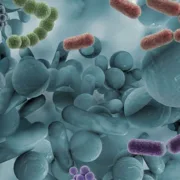
Cantrell and colleagues analysed microbial communities using 16S rRNA amplicon profiles. Their controlled experiments included mock soil traces originating from four locations and touch traces collected under controlled transfer conditions. Extreme gradient boosting (XGBoost) classifiers were trained and tested under different preprocessing conditions.
The researchers also examined the effect of removing extracellular, or relic, DNA. Such DNA can persist outside intact microbial cells and contribute to the sequence profile. Removing it might seem to improve the biological relevance of a sample, but could also remove useful classification information.
Soil evidence performed better than touch evidence
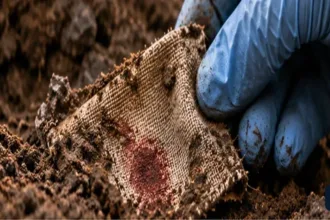
In soil experiments, classification accuracy for receiving-surface samples exceeded 84% and reached 97.9% in a particular tested configuration. Microbial community composition was strongly associated with collection location. These percentages describe performance within the study’s defined locations and conditions, not the probability that an unknown crime-scene soil sample can be traced to its true origin.
Human touch attribution was more sensitive to sample treatment. The best reported top-three donor classification accuracy was 86% for a control-trained model applied to control PVC receiving surfaces. Under a corresponding relic-DNA-depleted condition, top-three accuracy fell to 68%. Top-three accuracy means the correct donor appeared among three ranked candidates; it is not equivalent to a unique identification.
What relic DNA changes
Extracellular microbial DNA may contribute useful ecological information, even if it no longer comes from living cells. Its removal did not consistently improve attribution. In lower-complexity touch samples, depletion could weaken the signal needed for classification.
This matters because laboratory preprocessing can alter the evidence being measured. Any future casework workflow would need to establish whether the same preparation method is used for questioned and reference material and how differences affect error rates.
What this means for forensic interpretation
Microbiome profiling is best viewed as a developing source-attribution approach. Environmental changes, microbial transfer, persistence, contamination, database coverage and variation between people all affect the inference. A high classifier accuracy within four known soil locations does not establish performance among unrepresented locations.
A forensic report would also need to distinguish the source of a microbial profile from the activity that deposited it. Finding a similar microbial community on an object and at a location does not, by itself, establish when or how contact occurred. For background, see The Forensic Microbiome and AI-Powered Microbial GPS.
Research question and design
The central question was whether microbial DNA on a receiving surface could be classified according to its known source. The investigators evaluated two evidence types rather than assuming a model trained on soil would behave like a model trained on human touch traces. Soil material came from four defined source locations. The touch component used paired donor and receiving-surface samples collected under controlled transfer conditions.
The authors used 16S ribosomal RNA gene amplicon sequencing to describe bacterial community composition. This approach detects marker-gene sequences from microbial taxa; it does not provide a human STR profile and cannot independently establish the identity of the person who handled an object. The resulting sequence profiles were used as input to supervised XGBoost classifiers.
The study compared training and testing within the same processing condition with cross-condition testing. That distinction is important. A classifier can perform well when all samples are handled alike but fail when real evidence and reference material have different histories.
Understanding the reported accuracy
The strongest soil performance was observed when the model classified the origins of samples deposited onto receiving surfaces, sometimes called sinks. AccuracyIn scientific and measurement contexts, "accuracy" refers to the degree of proximity or closeness between a measured value and the true or actual value of Read Full Definition exceeded 84% and reached 97.9% in one configuration. These results concern the particular experimental sources and sample-handling arrangements; they should not be read as a universal source-identification rate.
The touch results used top-three accuracy. At 86%, the correct donor appeared somewhere among the three highest-ranked predictions in the best described control-to-control PVC comparison. When relic DNA was depleted from the receiving surfaces while the training scheme remained control-based, this fell to 68%. Neither figure is equivalent to a single-source identification probability or a likelihood ratio.
A forensic evaluation would also need false-positive rates, reproducibility across laboratories, geographically representative reference samples, and tests against sources absent from the training data. Such evidence is needed before a classification score can be given a defensible meaning in a criminal case.
How to interpret microbial transfer
Human touch can deposit a mixture of microbial material from skin, recently contacted objects and the surrounding environment. The observed community may change with time, humidity, cleaning, repeated handling and subsequent transfer. Soil signatures likewise vary with location and environmental conditions.
An apparent microbial match therefore raises more than one proposition. The material could have originated at a location, could have been transferred indirectly, or could reflect broadly similar microbial communities. Source attribution is not the same as determining the activity that deposited the material.
What would be required before casework use
A laboratory considering this approach would need validated collection controls, extraction blanks, contamination monitoring, sequencing quality metrics and a documented computational pipeline. It would also need a reference-database strategy that accounts for location and time, plus performance testing on realistic, low-biomass, mixed and environmentally challenged samples.
The practical lesson is not to replace conventional DNA profiling with a microbial classifier. It is to investigate whether microbial information can supplement other evidence, with conclusions limited to the population and conditions actually evaluated.
How to read this research
Key Takeaways
Soil-source classification was strong in controlled experiments, while touch attribution depended substantially on sample treatment.
- Researchers tested 16S rRNA profiles and XGBoost classifiers on soil and touch traces.
- Soil receiving-surface attribution exceeded 84% and reached 97.9% in one tested setting.
- Touch evidence top-three donor attribution fell from 86% to 68% after relic-DNA depletion in a reported comparison.
- These controlled results do not establish routine casework identification or activity-level conclusions.
Frequently Asked Questions
Can a microbiome identify a suspect?
Current microbiome methods are experimental for this purpose. Their classification performance depends on the samples, reference population and processing conditions.
What is relic DNA?
Extracellular DNA remaining outside intact cells, which can contribute to microbial sequencing results.
Is 97.9% accuracy a general forensic success rate?
No. It was achieved in a specific controlled soil-source classification setting and cannot be generalized to unknown casework.