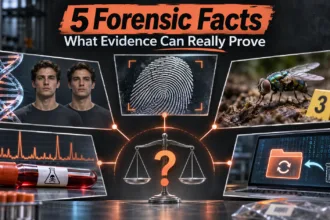
Forensic evidence is not always dramatic. A faint fingerprint, a speck of paint or a stray fiber can reveal information that ordinary inspection would miss. The methods are fascinating, but their limitations matter just as much. Here are five documented examples.
- 1. Superglue vapour can reveal an invisible fingerprint
- 2. A tiny car-paint chip can help narrow a hit-and-run search
- 3. Your DNA could reach an object you never touched
- 4. Light used to examine a fabric fiber may change its color
- 5. A drug field test can change color without proving what the powder is
- The lesson behind all five
1. Superglue vapour can reveal an invisible fingerprint
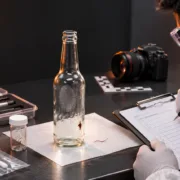
Cyanoacrylate, the chemical used in many superglues, is also used to develop latent fingermarks. Inside a controlled chamber, its vapour polymerizes on components of fingerprint residue, producing pale ridge detail on suitable nonporous surfaces. The developed impression may then be photographed or enhanced with a fluorescent dye. The NIJ Fingerprint Sourcebook describes the technique, while NIJ-funded research shows that temperature and humidity affect the results.
The limitation: Fuming cannot restore ridge details that were never deposited or have been lost. Even a developed mark may be too poor for comparison. See our fingerprint examination guide.
2. A tiny car-paint chip can help narrow a hit-and-run search
Factory automotive paint usually consists of several coatings, including primers, a color coat and often a clear coat. Their sequence, chemistry and color can provide more information than the visible surface shade. Investigators may compare a recovered chip with records in the Paint DataInformation in analog or digital form that can be transmitted or processed. Read Full Definition Query (PDQ) system, developed by the Royal Canadian Mounted Police. An NIJ forensic technology webinar explains how this can suggest possible manufacturing plants, models and production-year ranges.
The limitation: A database association is an investigative lead, not an identification of one particular vehicle. Repainting, incomplete chips and gaps in reference collections can limit the result.
3. Your DNA could reach an object you never touched
Suppose one person shakes your hand and then handles a doorknob. Some of your biological material may transfer indirectly to that surface. This is known as secondary DNADNA, or Deoxyribonucleic Acid, is the genetic material found in cells, composed of a double helix structure. It serves as the genetic blueprint for all Read Full Definition transfer. NIST’s DNA mixtures explainer uses this very scenario to show why a DNA finding cannot automatically establish direct contact.
The limitation: Secondary transfer is possible, not inevitable. The amount of DNA recovered depends on many factors. Identifying a possible contributor and deciding how or when their DNA arrived are different forensic questions. Our DNA reporting guide explains the distinction between results and conclusions.
4. Light used to examine a fabric fiber may change its color
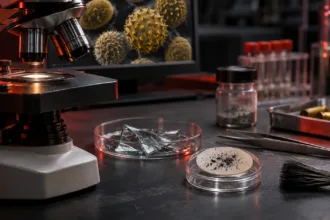
Microspectrophotometry measures the light absorbed by very small colored fibers and can help compare textile evidence without extracting dyes. Yet the light used for measurement can sometimes alter the sample. In a 2017 NIST study, researchers observed photofading in experimentally dyed cotton fibers, most notably in the red samples under their test conditions.
The limitation: This does not mean all fibers fade during routine testing. The effect depends on the dye and measurement conditions. It illustrates why laboratories evaluate even apparently nondestructive methods and document changes that might affect later comparisons.
5. A drug field test can change color without proving what the powder is
Portable color-reagent tests can quickly indicate that a seized substance might belong to a particular drug class. Their speed is useful for initial screening, but some substances produce similar reactions. An NIJ evaluation explicitly warned that field kits can produce false positives. NIJ’s 2022 guidance explains the role of confirmatory laboratory analysis, including techniques such as GC–MS and FTIR spectroscopy.
The limitation: A presumptive positive is not a confirmed drug identification. Mixtures, interferents and the method’s validation scope must all be considered before reporting a definitive conclusion.
The lesson behind all five
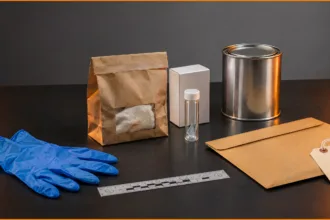
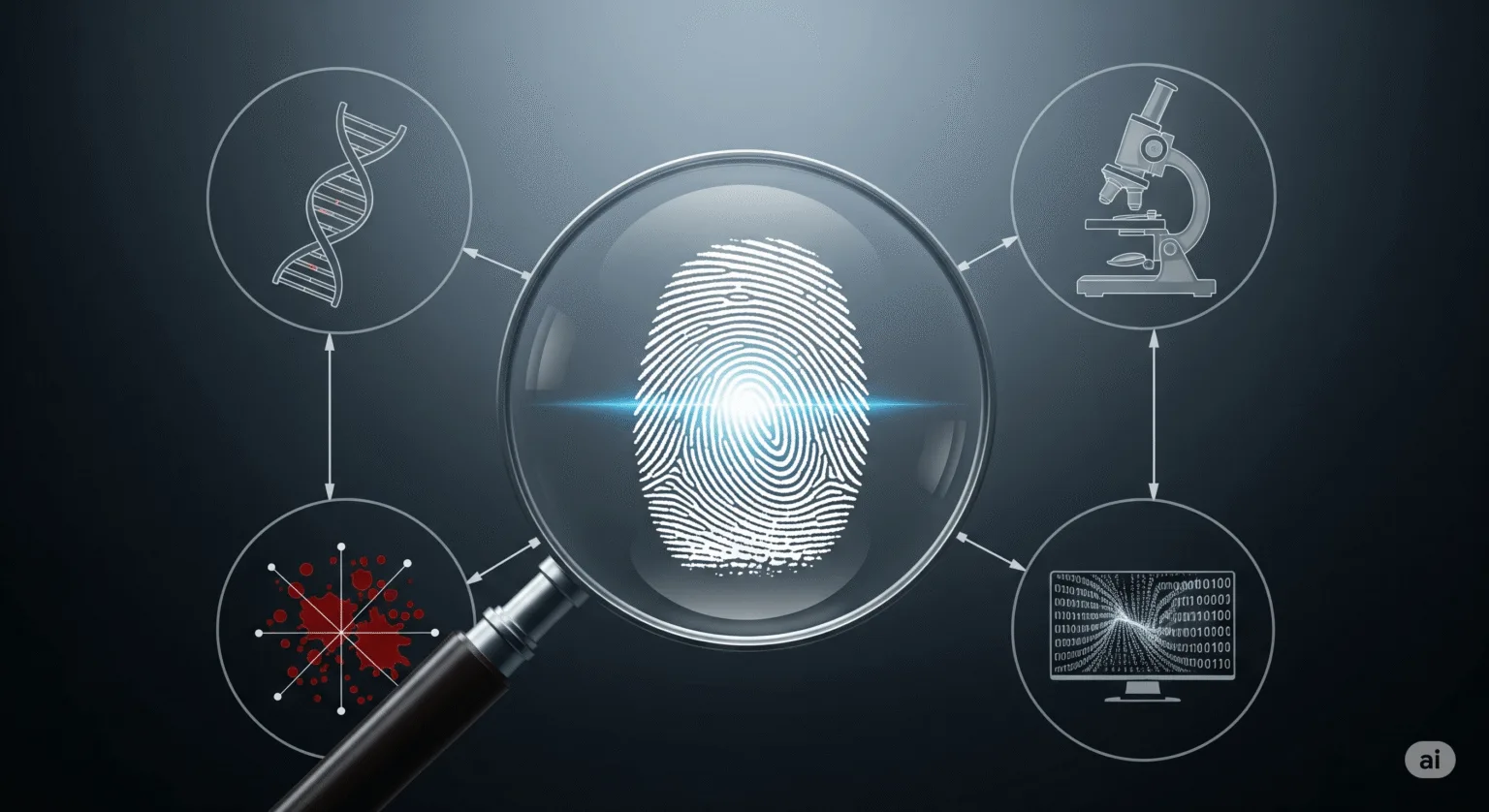
A useful forensic finding answers a carefully defined question. Fingerprint development reveals ridge detail; paint analysis narrows possible origins; DNA testing can identify contributors; fiber and drug tests characterize materials. None of those observations should be stretched into a claim the method cannot support. Read more about the order of examinations in our evidence recovery guide.
Key Takeaways
Five forensic findings that are scientifically useful only when their limitations are understood.
- Superglue fuming can develop latent fingerprintA latent print is an invisible fingerprint created by the transfer of sweat and oils to a surface. In forensics, these prints must be developed Read Full Definition ridge detail, but cannot restore an incomplete impression.
- Automotive paint layers can narrow possible sources without identifying one specific vehicle.
- Indirect DNA transfer can occur; a DNA profile alone does not establish when or how material arrived.
- Some textile dyes can photofade during microspectrophotometry under particular conditions.
- A presumptive drug test is a screening result, not confirmatory chemical identification.
Frequently Asked Questions
Does superglue detect every latent fingerprint?
No. Cyanoacrylate fuming works under suitable conditions on appropriate surfaces and cannot restore residue that was not deposited.
Can automotive paint identify a specific vehicle?
A comparison may suggest vehicle makes, models or manufacturing years, but identifying a specific vehicle requires additional evidence.
Does finding DNA prove direct contact?
No. Direct and indirect transfer are both possible explanations; the findings need assessment in the context of the case.
Does a positive field drug test confirm an illegal substance?
No. Presumptive tests can produce false positives or ambiguous reactions and require validated confirmatory analysis.
References & Sources
Show referencesHide references
- National Institute of Justice. Fingerprint Sourcebook, Chapter 7: Latent Print Development. Source
- NIJ Forensic Technology Center of Excellence. Identifying an Unknown Paint System Using RCMP PDQ. Source
- NIST. DNA Mixtures: A Forensic ScienceDiscover the fascinating field of Forensic Science, the application of scientific principles to legal matters. This post delves into its many disciplines, from DNA analysis Read Full Definition Explainer. Source
- NIST. Photofading in Cotton Fibers During Examination (2017). Source
- National Institute of Justice. QuickCheck Presumptive Drug Field Kits: Evaluation. Source
- National Institute of Justice. Model Strategies for Field Drug Testing Programs (2022). Source